Mansplaining Explained
A kinder approach to suffering the indignity.
It happened on a Wednesday, which feels right. Wednesdays have a particular energy — neither the fresh resolve of Monday nor the loosening goodwill of Friday — and are therefore ideal for small indignities.
A colleague approached my desk with the particular gait of someone who has decided, en route, to be generous. You know this walk. It has a slight forward lean to it, a purposefulness that announces I am about to give you something, and does not pause to ask whether you are in the market for receiving it.
Without solicitation — and I want to be precise here, because the absence of solicitation is part of the architecture of what followed — he proceeded to educate me on a technical subject in which I am already well-versed. Not merely acquainted, not fond of in a casual, hobbyist sort of way, but versed. Formally, professionally, thoroughly versed, in the way one becomes after years of dedicated work in a field.
He was also, it should be noted, largely inaccurate.
Not spectacularly so — not in the operatic, please-do-sit-down way that might at least have offered some entertainment value. Just quietly, confidently, consistently wrong in the manner of someone who has misread a Wikipedia summary, yet found it sufficient. He explained his inaccuracies with the smooth authority of a man who has never once been told that he was wrong about something, and who has therefore concluded that he never is.
He meant no harm. I want to be clear about this too, because malice would at least have been interesting. It was not malice that propelled him to my desk. It was the blameless, buoyant certainty that he was being helpful — that I, having apparently wandered through my work without grasping its deeper technical nuances, was the fortunate beneficiary of his spontaneous largesse. That I could not possibly understand what he understood. That the universe, on this particular Wednesday, had arranged things so that he might save me from my own ignorance.
He was wrong about the subject, and he was wrong about me. He was wrong, in a foundational and oddly touching way, about the entire situation.
I thanked him politely. He left satisfied. I sat with a low, familiar irritation — the kind that doesn't flare so much as simmer, the kind you carry around for the rest of the afternoon, rehearsing the things you might have said, tallying the cost of not having said them.
And so I noticed the cost.
Not of silence — silence was fine, silence was strategic and sensible. The cost of the irritation itself, the mental space it was quietly occupying. The energy I was spending being annoyed at a man who had already moved on and was, in all probability, explaining something else to someone else, buoyant and undimmed.
Here is what I had given him, entirely without his asking: my afternoon; a portion of my composure; a low-grade narrative running in the background, like an application you forget to close, quietly draining the battery.
This seemed, the more I looked at it, like a poor return on investment.
There is, it turns out, a word for what happened. There has been one since 2008, though the phenomenon it names is considerably older.
In April of that year, the American writer Rebecca Solnit published an essay called Men Explain Things to Me, in which she described attending a party where her host — a wealthy, imposing older man — had recently published a book on the nineteenth-century photographer Eadweard Muybridge. He then proceeded to tell her all about a very important book on that same photographer that had just come out. The book, of course, was Solnit’s. He had to be interrupted several times before this information penetrated.
Solnit never used the word “mansplaining” in the essay. She didn't need to. She had described the thing so precisely that a word was almost inevitable, and one arrived within weeks — coined, as best anyone can trace it, in the comments section of a LiveJournal post, where a user addressed a man who had explained a piece of art to her at considerable and uninvited length: “Wow, thank you so much for mansplaining this art to me! What with my arts degrees, I can't understand it at all.”
The word spread among feminist bloggers and then into mainstream use, acquiring along the way its standard definition: a man explaining something to a woman — typically with an air of condescension and an assumption of superior knowledge — without regard for the possibility that she already knows more about it than he does. Merriam-Webster and the Oxford English Dictionary both eventually added entries. Dictionary.com, in 2013, noted that the suffix -splain had proven “incredibly robust and useful as a combining form” — and indeed it has since propagated freely: whitesplaining, rightsplaining, goysplaining, potlucksplaining, and dozens of others, each naming the same essential dynamic relocated to a different axis of assumed superiority.
The title of this essay is, I should acknowledge, somewhat ironic. I am explaining mansplaining. Whether this constitutes a reflexive paradox or merely a reasonable use of available vocabulary I will leave to the reader.
What I can say is that the concept has always carried a distinction worth preserving — and that the distinction is not about whether men explain things. Men do explain things. So do women. Everyone does, given sufficient provocation and an audience who cannot easily leave. The distinction is the assumption underneath: you lack an understanding, that you couldn't possibly already know; that the explainer has correctly assessed your ignorance from a comfortable distance and has generously decided to remedy it, regardless of evidence to the contrary.
It is this assumption — unearned, automatic, often entirely unconscious — that sits at the centre of the thing. My colleague, on his Wednesday approach, had formed a hypothesis about my understanding before he reached my desk. The hypothesis was wrong. It did not occur to him to test it first.
Rather, what I needed, I decided, was not a sharper response but a better frame. Not a weapon, but a lens.
It came to me — not immediately, but somewhere between the third mental rehearsal and the making of tea — in the form of a toddler.
Specifically, a toddler who has just discovered dinosaurs.
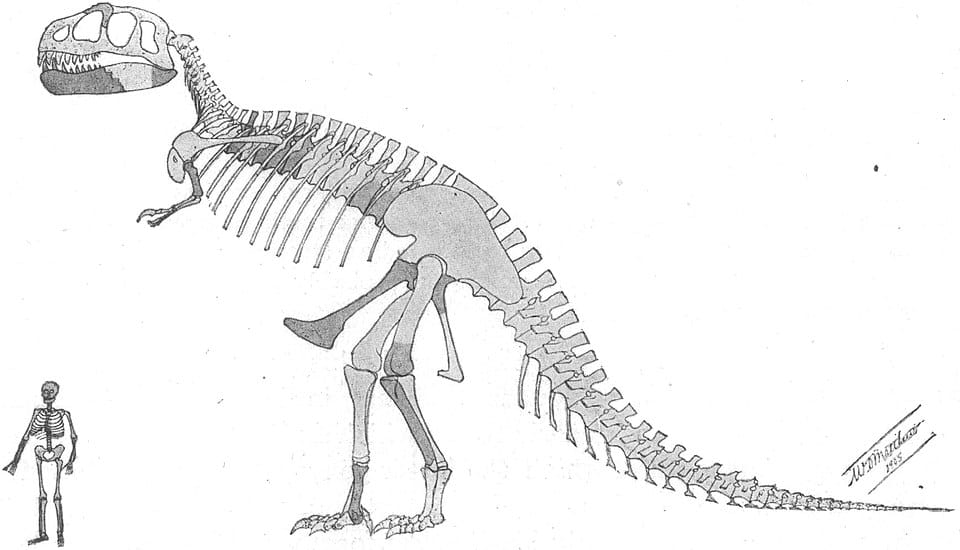
You know this child. Perhaps you have been this child. He is four, possibly five, and the world has recently cracked open to reveal that it once contained creatures of impossible scale and drama — that a Brachiosaurus was longer than three school buses, that the T. rex had tiny arms and terrible vision and could nonetheless run at twenty kilometres an hour, that an asteroid ended everything except the birds, which are actually dinosaurs, which he will tell you about right now, immediately, whether you were asking or not.
He is not trying to condescend to you. The four-year-old doesn't even know what condescension is. He is simply in possession of extraordinary information and has identified you as a person he can share it with, which is, in his mind, an act of pure generosity.
He is also, not infrequently, slightly wrong. The asteroid was more complicated than he knows. The running speed is disputed. The arms, while small, were not entirely useless. But you do not correct him on any of this, because he is four, and his face is luminous with discovery, and the wrongness is not the point.
The point is the enthusiasm. The point is that he found this information and thought of you.
I placed my colleague in this frame. His forward lean, his confident inaccuracies, the sheer unselfconscious momentum of his approach, and all of it suddenly rearranged into something almost touching.
He was four years old; he had just discovered dinosaurs, and had come to tell me about them.
Something in me, quite unexpectedly, unclenched.
Once I had the frame, I found I couldn't stop building variations on it. The exercise became, I confess, rather enjoyable — which is its own small compensation for the afternoon.
There is, for instance, the Wildlife Documentary approach, in which one imagines Sir David Attenborough narrating the encounter in real time: “And here, the male of the species, sensing an opportunity, begins his elaborate display of knowledge…” You maintain a look of gentle, appreciative wonder. You do not interrupt the commentary.
Or the Proud Parent, in which you beam at him warmly, as though he is your seven-year-old who has just run in from the backyard with everything he has learned about volcanoes. The instinct to say “That’s so good, little man” must be suppressed, but only just.
There is the Museum Curator, who mentally catalogues the encounter as a rare artifact. “Ah, yes — a fine specimen of unsolicited expertise, circa Wednesday morning. We’ll display this one next to the parking lot incident of 2019.” The diorama is entered into the collection with quiet satisfaction and placed behind glass.
The Anthropologist in the Field takes a more scholarly approach, adopting a tone of detached professional interest. She is documenting a newly observed ritual, nodding so encouragingly that the subject continues undisturbed. She considers, eventually, publishing her findings. The peer review process will be competitive.
The Sommelier swirls it. Sniffs it. Considers its notes of unearned confidence, its finish of untroubled obliviousness, its vintage overconfidence aged in oak. “A bold little number,” she concludes privately. “Presumptuous, but not without a certain artless charm.”
Finally, there is the Zookeeper, who has seen this before, is genuinely fond of this creature despite its habits, knows what it needs, knows it means no harm, and has snacks in her pocket. Everyone goes home fine.
These reframings work not because they are generous, exactly, but because they are accurate enough to be functional. They honour the essential innocence of the encounter without pretending it didn't happen. They do not require you to agree that you were in need of the explanation, nor demand gratitude. You simply observe from a slightly higher altitude, at which point the whole thing becomes, if not endearing, at least tolerable — and occasionally quite funny.
There is something else worth naming. Irritation grants the other person a significance they may not have earned. To be offended is to care, and to care is to make the thing matter, and to make the thing matter is to give it a place in your head where it will sit and eat away at you, refusing to leave, until you have written it all down or told someone about it — like here.
The toddler with his dinosaurs declines to sit. You smile, nod, murmur something appreciative, and put it all aside as he walks away satisfied. He still has much to learn about asteroids and about you. But he doesn't need to know that today, and neither, as it turns out, do you.
Rebecca Solnit, who started all of this (perhaps, without meaning to) — went to a party where a man explained to her the content of a book she had written, and came home and wrote it all down with devastating precision — understood this instinctively. She did not title her essay Men Who Infuriated Me. She titled it Men Explain Things to Me. There is a dryness in that title, a cool, observational distance that contains the irritation without being consumed by it. She looked at the encounter from altitude. She saw it clearly, and wrote it down.
The dinosaur explainer will return. They always do. But next time, I intend to find him mostly charming — and to note, privately, that his arms are not entirely useless.
They’re just smaller than he thinks.