Who Should I Thank?
Culinary Geography and Metaphysics of the Dinner Table
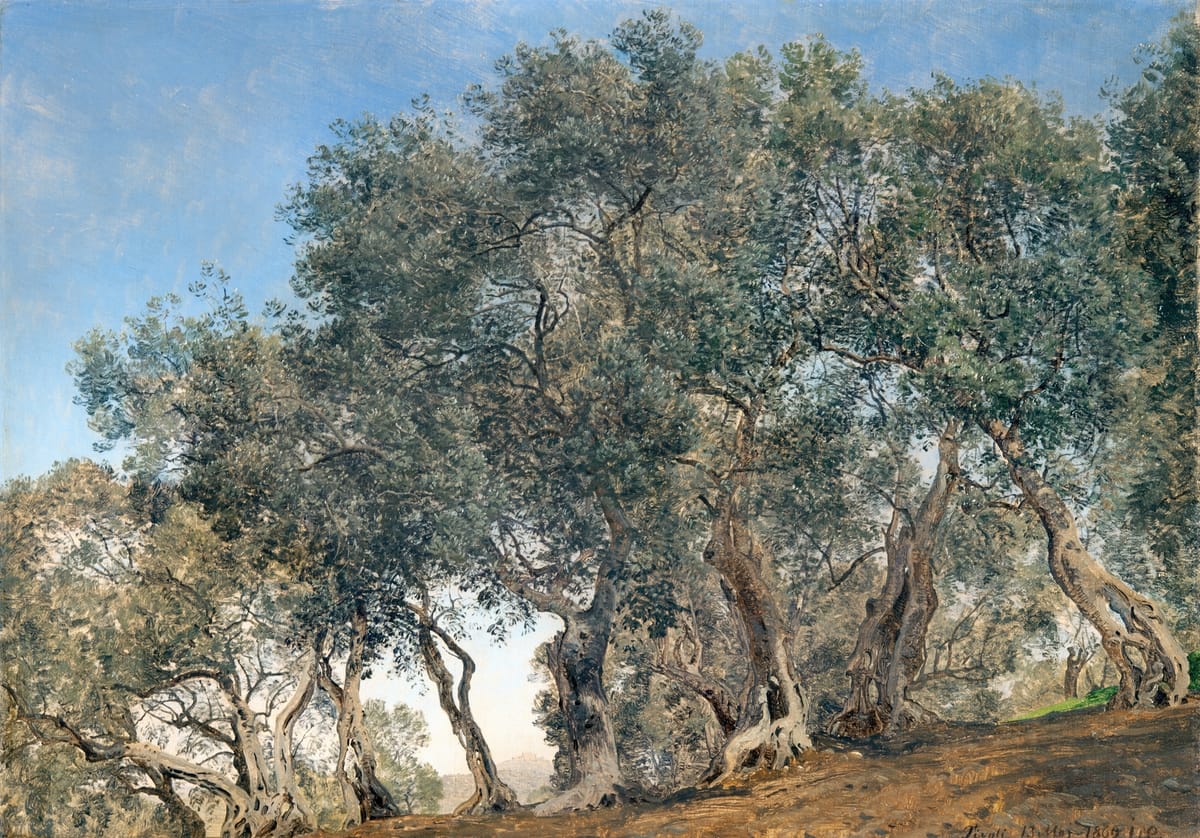
I want to be mindful. I want to be grateful. I want to be reverent.
But for the most part, I can’t seem to find where to direct that reverence.
I’m talking about what I ate today.
Let’s do a quick rundown.
Breakfast: blueberries from Nova Scotia with some milk from Ontario.
Lunch: sardines from Algeria, a salad of tomatoes, green peppers and cucumbers from my garden, dressed with olive oil from Tunisia and apple cider vinegar from Ontario, and salt from... no idea.
Dinner: lettuce, red cabbage, and carrots from somewhere in Ontario; dressing the same as at lunch — same garden cucumbers, tomatoes, and peppers, with (again) some unattributed salt; pasta from Italy, with pesto made from my garden’s basil, garlic from Spain, pine nuts I think from China, and Romano cheese from Italy grated over top.
And coffee: moka espresso, all day — roasted in Italy, but grown where? By whom?
That’s my caloric geography for one ordinary Tuesday: five countries and at least two provinces, passing through my body before evening.
I can extend gratitude and reverence toward my garden vegetables. That is easy — I planted them, weeded them, watched them come up. But reverence needs a face, or at least a place. It needs to land on something. And everything else on today’s table resists that landing.
I have never met the cows who provided the dairy. Never seen the Nova Scotian berry farm, nor the Ontario field where the carrots grew. I don’t know which grove in Tunisia the olive oil came from, whether the trees were young or a century old, who picked the olives or carted them to the press. I don’t know if the Algerian sardines came off a small family boat or out of the hold of some international trawler, dragging a net through everything in its path. The pine nuts — harvested how, by whose hands? The wheat for the pasta — which field? The salt — despite being the one thing every meal needed — I have no idea at all.
Of course, I am grateful for this abundance, for the choices available to me, for my place of privilege in this world. Not everyone can afford to ponder the metaphysics of the dinner table.
That aside, what I sense is also missing is a sense of reciprocity. With my garden, and earlier this year with my patch of wild black raspberries, I knew to thank the land, and the birds who spread the seed — and I always left some fruit behind, for just that reason: reverence and reciprocity, in the same gesture. But in much of today’s meals, other than a cold cash transaction at the supermarket, my sense of what should be — reciprocity — has nowhere to go.
We are so divorced from where our sustenance comes from. And this is recent. Even in my own lifetime, it was not always so.
My grandparents, in Eastern Ontario, got their milk and cheese from a farmer down the road — a man they knew by name, to whose cows they could have pointed. They grew most of their own vegetables. Even the ice for the icebox was cut from the local lake in winter and delivered, block by block, by the iceman. They knew his name and so did I (Mr. Da Prato — I remember him). Their caloric geography was a five-mile radius and a handful of familiar faces — close enough for reciprocity, and perhaps even reverence, to still be possible.
I believe it is this — reciprocity with nowhere to go — more than anything else that saddens me, in a way that is precise and yet ineffable.