Tomato Tariff Taxonomy
The Supreme Court in 1893: Science vs. Common Parlance
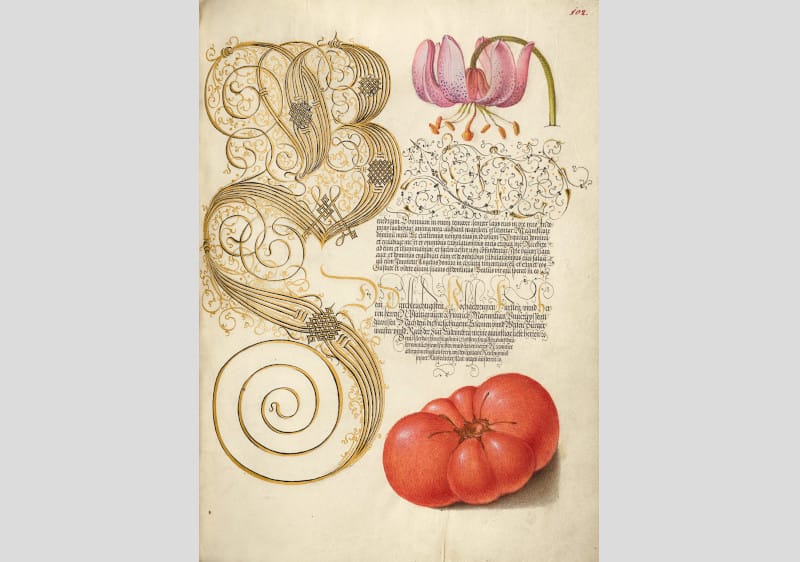
Tariffs in the United States are nothing new. Nor is the ease in which the Supreme Court panders to whomever is in power.
Take the bizarre case of Nix v Heddon, which involved the legal status of the tomato.
In 1883, the government of the United States passed the Tariff Act which tripled the tax on imported vegetables but not on fruits. Fruits were completely exempt.
At that time, John Nix & Co. was the largest seller of produce in New York City and was a major importer of both fruits and vegetables. He had paid a substantial amount of tariff fees to the government, even though the tomato is, botanically, a fruit.
Eats, Shoots, and Leaves — or Eats Shoots and Leaves?
Even my nine-year-old granddaughter knows that a tomato is a fruit. The science is and has been clear on the matter for more than 100 years. A fruit is defined as the seed-bearing structure of a plant which develops from the ovary of a flower. A vegetable is any part of a plant that we eat, which can include flowers, stems, leaves, roots, seeds, and fruits themselves. “Fruit” is a botanical term, whereas “vegetable” is a culinary term.
Based on science and botany, green beans, pumpkins, cucumbers, eggplant and several other edibles we commonly term vegetables, are actually fruits.
As the humorist writer Miles Kingston remarked:
Knowledge consists of knowing that tomato is a fruit. Wisdom is knowing not to put it in a fruit salad.
But what if you ask a lawyer?
If a lawyer becomes involved, it becomes a trick (and billable) question. Which brings to mind the 1937 Gershwin song “Let’s Call the Whole Thing Off” (later performed by Ella Fitzgerald, among others), where the lyrics say “You like to-may-to, and I like to-mah-to”… but I digress.
The “trickiness” of the question from a lawyer’s point of view brings us back to John Nix who filed suit against Edward L. Hedden, Collector of the Port of New York. His argument challenged the tariff status of the tomato.
Eventually the case worked its way up to the Supreme Court. Nix’s attorneys cited three dictionaries and called in witnesses who had been selling fruits and vegetables for over thirty years.
But their testimony didn’t matter.
Despite scientific definitions, Justice Horace Gray opined that the words have no special meaning in trade or commerce, and so the court must use common parlance — therefore the tomato is a vegetable.
Here are Gray’s words:
Botanically speaking, tomatoes are the fruit of a vine, just as are cucumbers, squashes, beans, and peas. But in the common language of the people, whether sellers or consumers of provisions, all these are vegetables which are grown in kitchen gardens, and which, whether eaten cooked or raw, are, like potatoes, carrots, parsnips, turnips, beets, cauliflower, cabbage, celery, and lettuce, usually served at dinner in, with, or after the soup, fish, or meats which constitute the principal part of the repast, and not, like fruits generally, as dessert.
[The dictionary] does not classify all things there, but they are correct as far as they go. It does not take all kinds of fruit or vegetables; it takes a portion of them. I think the words 'fruit' and 'vegetable' have the same meaning in trade today that they had on March 1, 1883. I understand that the term 'fruit' is applied in trade only to such plants or parts of plants as contain the seeds. There are more vegetables than those in the enumeration given in Webster’s Dictionary under the term 'vegetable,' as 'cabbage, cauliflower, turnips, potatoes, peas, beans, and the like,' probably covered by the words ‘and the like.’
So, boys and girls, the moral of the story is that the august Supreme Court, as appointees of the government, has a long history of leaning with gratitude towards whatever entity gave them their comfy chairs.
Furthermore, the highest court in the land, way back in 1893, confirmed that science didn’t matter, but what did matter was what the majority of people believed. In other words, any fiction will do, especially when it supports raking in money.
And while we are discussing "The Truth”, here is a great clip from the Simpsons where Marge is given an explanation on the subject. Enjoy!
Lionel Hutz explains "The Truth" to Marge — Jim Reardon and Swinton O. Scott III, dirs. "Reality Bites". The Simpsons, Season 9, Episode 9, Dec 7, 1997.
Would you like to read other posts? If so, please click the Home Page link below: