Thirty Pieces of Silver and the Stock Market
Is the Economy an Act of Faith or like the Spread of Mildew in a Basement?

First, my disclaimer: I am no expert in investing and finances.
Second, my counter-disclaimer: I have worked for a living for over fifty years.
And, given the present economic situation, I will likely, despite my advanced age, continue to work and die in harness like a limping mule.
It Started with a Phone Call
A long-time acquaintance telephoned me the other day to share what he thought was sound financial advice. Without going into all the details of our conversation, he strongly recommended that I purchase silver bullion (the actual metal and not the paper asset through the bank), because this particular resource — to his thinking — would be going through the roof and I would stand to increase my investment significantly over a relatively short period of time. Here is a YouTube video that posits these same ideas:
Although the video is buttressed by official looking pictures, graphs and charts, and despite the narration being rather professionally uninflected, it does have a whiff of conspiracy theory.
But then some people need conspiracies: finding the simple horror of the truth is sometimes too brutal, too filled with existential terror.
Why did my Hackles Start Rising?
As I listened to the reasoning of my acquaintance — gold is too expensive, there will be a shortage of silver, silver is necessary for the production of many things we need (or think we need), you can trade the physical silver once the currency collapses, and so on — I found myself feeling increasingly uncomfortable with his foundational reasoning.
It would seem we live in a world where labour, creativity, work are no longer rewarded — at least not often, and not in a truly significant way.
Some aspects of the world in which we live were both portrayed and predicted in a few older films, namely Wall Street (1987), Boiler Room (2000) and The Big Kahuna (1999). More recently, consider The Wolf of Wall Street (2013) and The Big Short (2015).
The thing about these movies is that everyone gets their comeuppance in the end. Justice is done. The scales of good and evil balance out. But that’s Hollywood. And a reflection of Stephen King’s formula he called the Three R’s: Rebellion, Ruin and Redemption. In other words, winning fiction, and much beloved by Oprah Winfrey.
My Most Satisfying Transaction

Perhaps one of the most satisfying commercial transactions I’ve experienced was when I researched and wrote a client’s family history biography; you can read it here if you like:
 Denise Choppin
The client asked if there was any significant (not huge, just meaningful) purchase I needed to make. I replied that I could use a good amount of topsoil for my vegetable garden. And so, I presented him with his commissioned historical biography, and he had a truck dump a massive pile of dirt onto my driveway.
Thirty Pieces of Silver — A Digression
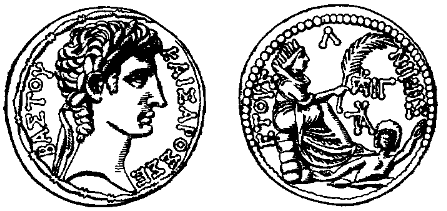
Interestingly, if you are familiar with Christian mythology, Judas was paid thirty pieces of silver for betraying Jesus.
The story of what he did with his “ill-begotten gains” is contradictory in the bible. According to Matthew, Judas tried to return the money to the chief priests. They, however, felt it couldn’t be put into their treasury, being blood money despite it having been originally okay to pay Judas from their treasury in the first place (oh well, go figure) so they used it to buy a potter’s field (a graveyard). This action had the benefit of fulfilling an older prophecy, so politically it made a lot of sense.
In the Book of Acts, there is a considerably more colourful story, where Judas used the money to buy a field. He then fell there, his body burst open and all his intestines spilled out. Ouch.
In any case, it didn’t work out well for anyone, except perhaps for the high priests who got some brownie points with Rome and free real estate too.
What is additionally interesting about the story, and a part that is often overlooked, is that 30 pieces of silver, according to Mosaic Law (cited in Exodus), were the value of a dead slave. Of further note, various historians and scholars have researched the type of silver coins used and what they might be worth in today’s money. The answer? Between $90 and $450.
Returning to the Moral Quandary
It isn’t the Biblical story that gives me pause. It is the notion that we can and should make money by gambling and betting on scarcity, and not by “honest work” as it was once naively called.
Here is a quote from Wall Street where a father is talking to his stockbroker son, the protagonist of the story:
Stop going for the easy buck and start producing something with your life. Create, instead of living off the buying and selling of others.
I wonder what will be written about the lives of people who gained financial ease through the buying and selling of commodities, stocks, or scarcities? Will their descendants proudly relate “he was a wizard in the market”? Or will others remark, like the characters Mark, Danny, and Porter in The Big Short:
Mark: I don't get it. Why are they confessing?
Danny: They’re not confessing.
Porter: They’re bragging.
Or will dearly departed be memorialized in an obituary that mentions their prowess at golf, their “success” in business, their generosity in the religious community, and their devotion to their pet canary?
Although most of us will not create a legacy worthy of a Wikipedia page, most obituaries strike me as sad, with stories conspicuous by their absence.
Which brings me back to…
The Stock Exchange or Stock Market – Its Origins
You could say it started in Amsterdam in 1602, when the Dutch East India Company first established the Amsterdam Stock Exchange.
Or, you could go back to ancient Rome with its societates publicanorum. These organizations were put together by government contractors who traded their shares, and these shares had fluctuations in value depending on the success of a given venture.
Or, you could visit the Medieval period in the cities of Venice, Genova, Pisa and others, whose city states and their bankers jostled government debt and promissory notes.
Or, you could consider London in the late 1500s, where various brokers sat around in coffee houses trading in shares of ships’ cargoes and other ventures.
Or, we can simply start in the United States in the late spring of 1792, when twenty-four New Yorkers, who often met under a buttonwood tree on Wall Street, got together in some unknown location (likely the Tontine Coffee House) and signed an agreement to trade securities with each other at a fixed commission rate.
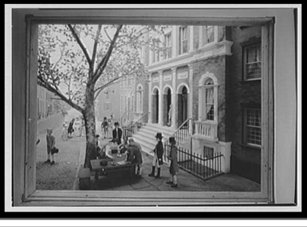
A bit of a digression: 'Buttonwood' is actually a rather picturesque name for the American Sycamore. It’s oddly coincidental that the sycamore tree is more rigid and less elastic than other trees. Most trees grow by stretching, splitting or infilling, but the sycamore must shed large and brittle pieces of bark in order to grow, which explains its rather uniquely mottled and scabrous bark. The sycamore can grow into something massive – up to 53 metres in height and close to 4 metres in diameter — but once it gets large, the trunk usually becomes hollow. So many apt analogies…
Then, in 1817, the New York Stock & Exchange Board was established and became the New York Stock Exchange (NYSE) in 1863.
Where We Were in 2000?
Either you're slingin' crack-rock, or you've got a wicked jump-shot.
— Boiler Room (2000)
In 2025, the wealthiest 1% of Americans owned nearly 50% of the stock market. The top 10% own 87.2%, and the bottom half owned 1.1%.
Let's take a step back in time, to the 1980s and listen to the words of Gordon Gekko, the epitome of 1980s “greed”, where he is schooling his new protégée:
The richest one percent of this country owns half our country’s wealth, five trillion dollars. One third of that comes from hard work, two-thirds comes from inheritance, interest on interest accumulating to widows and idiot sons and what I do, stock and real estate speculation. It’s bullshit. You got ninety percent of the American public out there with little or no net worth. I create nothing. I own. We make the rules, pal. The news, war, peace, famine, upheaval, the price per paper clip. We pick that rabbit out of the hat while everybody sits out there wondering how the hell we did it. Now you’re not naive enough to think we’re living in a democracy, are you buddy? It’s the free market. And you’re a part of it. You’ve got that killer instinct. Stick around pal, I’ve still got a lot to teach you.
This scene was written almost forty years ago, but it could have been composed yesterday with only a small change of the figure in the first sentence, and some minor adjustment of the percentages in the second.
Sin Stocks and Ethical Stocks
There exists this fantasy that you, the small investor, can somehow choose between ethical and sin stocks. Even my financial advisor at a major Canadian bank referred to this modern piece of folklore when encouraging me (read, “selling me”) on the concept of doing good in the world through ethical investing.
The notion of “sin stocks” is very well known: Tobacco, alcohol… you know, those “bad” things in the marketplace. Sometimes, depending on your political views, you might add Walmart, Microsoft, Coca Cola, Tesla, McDonalds, and any other organization you find distasteful. Maybe it’s those who contributed to a political party you dislike, maybe it’s a company stripping the earth of resources, a massive pollutor, an arms manufacturer… Or, nowadays, if you are inclined towards the political right wing, a company that is supportive of diversity and inclusion.
On the other hand, “ethical stocks” are not as often cited as a concept, but would include the opposite of every company or group you might despise.
But, unless you are buying stock in an IPO (Initial Public Offering) the concepts of “sin” or “ethics” do not exist. Let me explain why.
Who Gets My Money When I Invest?
I’ve asked several people this question — people who invest heavily and often in the stock market. Interestingly, most don't know the answer, or assume that the money goes to the company whose stock they are purchasing. This is the fallacy at the heart of the concept of sinful or ethical stocks.
When a company goes from being a private entity to a publicly traded organization, it goes through the process of an Initial Public Offering. Without getting too far in to the particulars of this event, this is the one and only time when investors actually give their money to the company. Share prices are set, investors buy those shares and become stakeholders. The company usually holds back a certain number of shares to keep as their own. Other than in some uncommon and rather complicated circumstances, this typically does not happen again.
Money for the Devil
When others then buy shares of the company — let’s call it Acme Corporation — they are buying the shares from those who already bought them, not from Acme. So, if the Devil bought shares in Acme and offered to sell those shares, which you then buy, your money would go to the Devil. (The same goes for Wile E. Coyote.)
Think of it like buying a car. If I buy a new car from Ford, my money goes to Ford. When I sell it on the used market, the money from the sale goes to me — not back to Ford.
Of course, the act of buying shares in our fictitious Acme company benefits them in terms of consumer confidence and the value of their company — like a used car holding higher value on the used market as opposed to its competitors. And this confidence may translate into other investors being willing to throw funds into expansions, growth and so on.
What I find astonishing, breathtaking in its facile disregard for reality, is that people do not hesitate one instant, do not take even a moment to consider who and what they are funding. These same people rail against public money funding things of which they disapprove; or, on a simpler level, won't even toss a coin in a panhandler’s cup without some admonition or moral lecture to spend it on something they approve of (use this for coffee, or food, but not for cigarettes or drugs).
A story rises up, like a rotten log in a pond
This disregard or indifference towards where one’s “hard-earned” money is going, I find appalling. I also find the notion that it’s perfectly okay to trade on the notion that somehow stock or share values are real — not arbitrarily set based on some Act of Faith bolstered solely by greed, sloth, and gluttony to be the rotten log at the bottom of the pond.
For centuries, greed, gluttony and sloth have been considered deadly sins. But, according to one character in the film Boiler Room:
Anybody who tells you money is the root of all evil doesn't fucking have any.
I haven't yet provided any quotes from Neil Simon's brilliant play “The Big Kahuna”, which was made into a magnificent film. Here are two to ponder:
Sometimes you gotta chew your own leg off to get out of life’s traps.
And:
Here’s to the profound religious experience that comes from doing a job well and being grossly underpaid.
Lastly, and because it suits my mood at the moment, I present a specific German word:
Weltschmerz
The word is German for “world-pain” and is both a literary and philosophical term for weariness with the world. It means that reality can never satisfy one’s ideals, and it speaks to an awareness of evil, suffering, or injustice.
The term gained traction in 19th century Romantic literature and art, to convey a melancholic or pessimistic mind-set where the gap between what should be and what is causes profound disillusionment.
Anyway, I won't be buying silver, gold, stocks, or shares anytime soon, and will continue to live in my version of genteel poverty.
Ahimè, non c'è rimedio!
Would you like to read other posts? If so, please click the Home Page link below:
You, Dear Reader, are much needed and appreciated.
Everything written requires a reader to make it whole. The writer begins, then you, dear reader, take in the idea and its image, and so become the continuation of its breath. Please subscribe so that my words can breathe. Consider this my hand, reaching out to yours.