The Satiety of Live Music
Infrasound, Social Grout, and What Recordings Cannot Deliver
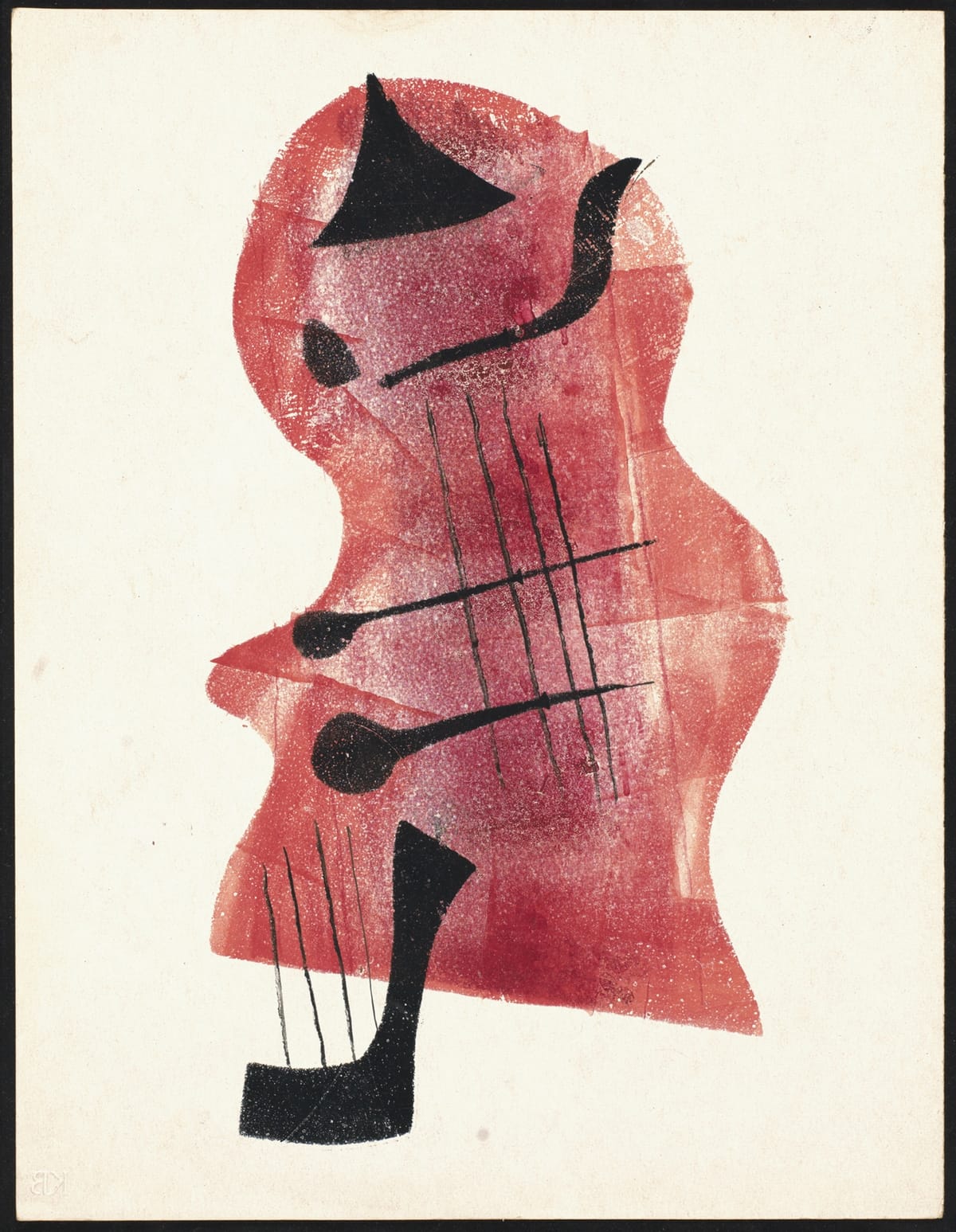
A Room, Some Chairs, and a Cello
The City of Mississauga, in its quiet municipal wisdom, runs a live music program. Small venues. Modest audiences. Chamber music, jazz piano, strings — the kind of programming that does not require a subscription or a dress code or valet parking. I came to it almost by accident, after decades of not attending live music at all, and discovered something I was not expecting and could not, at first, explain.
The tug.
It arrived as soon as the music began. Something physical — not pain, not quite pleasure in any simple sense, but a kind of probing, a wave movement through the body that was at once questioning and answering, anticipatory and receiving. By the time a cello was involved — on one occasion, a cello, alone in a small room — I had stopped trying to explain it and simply let it happen. A painless peeling off of the skin, and the entrance of something other. A good other. What I can only call, borrowing a phrase I’ve used elsewhere, spiritual satiety — the condition of having received enough from the world around you, of having been addressed by it, and finding that it is sufficient.
I had not felt this in a very long time.
I had not known I was missing it.
What follows is my attempt at a grounded explanation — grounded being the operative word, for reasons that will become apparent. The science I will draw on is real, if not yet fully settled. The more speculative threads I have moved to a footnote, where they belong. What remains is, I believe, a reasonable account of what happens to a human body in the presence of live acoustic music, and why that experience is not simply a more convenient version of listening to a recording, but something categorically different.
What Live Music Actually Is
When a cellist draws a bow across a string in a small room, the event is considerably more physical than it appears.
The instrument produces sound across a wide frequency spectrum — from its resonant fundamentals in the range of 65–300 Hz, through its upper harmonics, and downward into frequencies below the conventional threshold of human hearing. This lower territory, below approximately 20 Hz, is called infrasound. It cannot be consciously heard. Yet it can, however, be felt — in the sternum, the chest cavity, the abdomen, the soles of the feet. It is received by the body through several distinct channels that have nothing to do with the ears: mechanoreceptors in skin and tissue that respond to pressure and vibration, the vestibular system of the inner ear that governs balance and spatial orientation, and the autonomic nervous system that regulates heart rate, respiration, and the body’s baseline state of arousal or calm.
The scientific literature on infrasound and its physiological effects is genuine, if uneven. What is reasonably well established is that low-frequency sound — including infrasound — has measurable effects on autonomic nervous system functions. Heart rate variability, a reliable indicator of physiological flexibility and stress resilience, responds to low-frequency acoustic stimulation. Respiratory rate can slow and deepen in response to sustained low-frequency sound, a process called entrainment, where the body’s own rhythms are gently pulled toward synchrony with an external one. At sufficient intensity, low-frequency sound produces the sensation of a physical presence — something in the room with you — through pathways entirely separate from conscious hearing.
Large bowed string instruments — cello, double bass — are especially effective generators of such low-frequencies. So are certain configurations of room acoustics. A small, hard-surfaced venue with modest dimensions creates standing waves and resonant modes in the low-frequency range that couple directly to the bodies present in it. The room itself becomes a participant in the acoustic event, not merely a container for it.
Venue quality matters here. A room with heavy carpet, upholstered walls, and acoustic ceiling tiles is a damped room, one that suppresses the low-frequency resonance that makes small venues physically distinctive. A harder-surfaced room of appropriate dimensions will resonate sympathetically with the instruments, contributing its own low-frequency character to the event. Not all small venues are acoustically equivalent, and the difference matters to the body even when it goes unnoticed by the conscious ear.
This matters for a reason that becomes most clear when you compare it to what a recording provides.
What Recordings Cannot Deliver
A recording is a representation of an acoustic event, not the event itself. This distinction, which sounds obvious, has consequences that are less obvious, and less frequently acknowledged.
The recording process filters low-frequency content at various stages — microphones, mixing consoles, and mastering operations all apply high-pass filtering, partly to remove unwanted mechanical rumble, partly because low-frequency content consumes dynamic headroom and creates problems in reproduction. The digital formats through which audio recordings reach listeners are optimized for the frequency range the ear consciously processes. The infrasonic content is not captured, and therefore cannot be reproduced.
Home playback systems compound this. Most domestic speakers, including good ones, roll off steeply below 40 Hz. Genuinely flat response to 20 Hz requires large, expensive, carefully positioned subwoofers in purpose-built rooms. True infrasound reproduction in domestic settings is essentially impossible. And even where physical reproduction is possible, a domestic room — too small to support the standing waves a concert venue generates — cannot replicate the acoustic conditions that make low-frequency sound a whole-body sensation in the same way as at a live event.
The recording industry’s role in establishing recorded music as the default experience happened remarkably quickly in historical terms — within living memory — and was driven by commercial logic rather than any assessment of what was being lost. What was lost, it turns out, was not merely fidelity in the audiophile sense. It was the physical, sub-audible, somatic dimension of musical experience: the part the body receives below any threshold of conscious hearing, and below any threshold of conscious awareness of what it is missing.
This is not a small loss. I contend what is lost is precisely that which produces the tug when it is returned.
The Body as Receiver
The relationship between live acoustic music and the human body is not simply one of ears receiving organized sound and brain producing an emotional response. It is considerably more physical and considerably more direct than that.
The autonomic nervous system — the network governing heart rate, digestion, respiration, and the body’s moment-to-moment physiological state — responds to low-frequency acoustic stimulation through pathways that bypass conscious processing entirely. Sustained low-frequency sound in the range produced by strings and acoustic piano tends to shift autonomic balance toward what physiologists call parasympathetic dominance: a state of regulated, open, receptive awareness — lower heart rate, higher heart rate variability, slower and deeper breathing. This is not relaxation in the passive sense. It is the physiological condition of genuine presence.
The vestibular system — the inner ear structures that manage balance and spatial orientation — responds to low-frequency sound and infrasound directly. In a small venue with live acoustic instruments, the vestibular system is processing a spatially immersive acoustic field: sound arriving from multiple directions at slightly different times, reflected off walls and ceiling, generated simultaneously by multiple instruments. This produces a mild but genuine sense of being inside the acoustic venue rather than outside it listening in.
Here I will offer what is not rigorous scientific architecture but something closer to a logical extension of acoustic principles — a gut feeling, if you will, and the pun is entirely intentional. The body cavities — chest, abdomen — have resonant properties determined by their physical dimensions and contents. Low-frequency sound in the range produced by cellos and bass instruments couples to these cavities mechanically, producing genuine vibration in their tissues. Individuals differ in how strongly they experience this, for reasons that include body size and configuration, and the degree to which interoceptive sensitivity — conscious access to internal bodily states — allows these physical stimuli to reach awareness. For some people, the somatic component of live musical experience is vivid and central. For others, it operates entirely below conscious awareness.
The repertoire variable matters here and deserves honest acknowledgement. The physical effects I am describing are not uniform across musical genres. They depend substantially on frequency content, dynamic range, and acoustic properties of the instruments involved. Chamber music, jazz with acoustic bass and piano, certain folk traditions — these generate the low-frequency content and dynamic variation that drive the somatic and autonomic effects most fully. Electronically amplified music with compressed dynamic range and narrow-band synthetic bass operates differently: it may be loud, but loudness is not the same as the spectrally rich, naturally modulated low-frequency output of acoustic instruments in resonant spaces. This is not a value judgment about musical genres. It is an acoustic observation with physiological consequences.
Deprivation and Return
Something that has been absent for decades and then returns does not arrive quietly.
The body registers deprivation below any threshold of conscious identification. We do not walk around with a named awareness of what we are missing when it is missing — we simply exist in its absence, making adjustments so gradual and so complete that the adjustment becomes invisible. The return is when the absence becomes legible, because the contrast is suddenly available.
I had not known, across the decades without live music, that anything particular was missing. Recorded music was present, abundantly so, and I had no frame of reference for what it was not. What I experienced on returning to a small room with live acoustic instruments was therefore disproportionate to any conscious expectation — which is precisely what deprivation and repletion produces, when the deprivation has been long and the receiver is constitutionally attentive.
The tug was not nostalgia. It was not aesthetics, or not only aesthetics. It was a physical sensation with a physical cause: a body receiving, through somatic and autonomic and vestibular channels operating below conscious awareness, a constellation of inputs that it had been without for years. The spiritual satiety that followed — that sense of having been addressed by something and finding it sufficient — was the felt quality of genuine repletion. The body knowing, in whatever language bodies use for knowing, that it had received something real.
Social Grout
There is a final dimension recordings cannot provide that deserves its own consideration.
The audience in a live music venue is not a collection of individual listeners who happen to occupy the same room. It is a physically coupled system — acoustically, thermally, and in subtler ways that science is only beginning to describe adequately.
Human bodies absorb sound. A room full of people sounds different from an empty one — warmer, more immediate, the high frequencies damped by clothing and hair and soft tissue while low frequencies pass through the assembled mass largely unimpeded. The collective presence of an audience shapes the acoustic environment the music inhabits, while simultaneously being shaped by it.
When an audience moves together — a shared stillness at a quiet passage, a collective breath before resolution, the slight physical lean of bodies responding to a phrase — they become a coupled oscillating system. The floor registers this. In some measure, so do the instruments and the room. The music is not passing through a neutral medium; it is passing through a room full of bodies that are themselves responding to it, and that response is fed back into the acoustic field in ways no recording situation can replicate.
But the most important observation about the social dimension is simpler than any of this. Music in a shared room does something amongst the people present that I can only describe as social grout — filling the spaces between separate individuals with something that holds them in structural relationship without dissolving their individual integrity. Grout is load-bearing without being conspicuous. It is invisible when the work is done well. It is what allows separate things to function as a whole without losing their separateness.
This is not the same as saying music creates togetherness in some vague emotional sense. It is more specific. The shared physical experience of infrasonic and low-frequency sound in a small room — the collective autonomic shift, the shared entrainment of respiratory and cardiac rhythms toward a common pattern, the simultaneous somatic resonance of different bodies responding to the same acoustic event — creates a condition of genuine physiological coupling between strangers. They are, briefly and without knowing it, resonating sympathetically. Their nervous systems have been tuned, below any conscious threshold, toward a shared state.
This is what the recording, played alone or even in company, does not produce, at least not to an appreciable degree, because it lacks infrasound.
Sound through speakers in a room does not drive infrasonic standing waves through the floor. It does not fill the space between people with frequencies their bodies are simultaneously shaping and being shaped by. The social experience of recorded music is real, but it is socially mediated — through conversation, through shared attention, through the human context of listening together. The social experience of live acoustic music includes all of that, and underneath it something more physical: the bodies in the room, briefly and without ceremony, become part of the same event.
A Grounded Inexplicable
I began by saying the tug was inexplicable. I want to end by saying it still is, but differently.
The science I have described is real, although not yet completely settled. The mechanisms — infrasound, somatic resonance, autonomic entrainment, vestibular stimulation, collective physical coupling — have not been invented. They have been documented, albeit not necessarily in the specific combinations and intensities that live acoustic music in a small venue produces. The account I have given is the best available physical explanation for an experience that is, in the living of it, not remotely physical in feeling.
That is not a paradox. It is simply what happens when the body receives something below the threshold of conscious perception and the mind reports it with the only vocabulary available — felt, moved, stirred, saturated. The tug is the body’s word for what the physics is doing. Spiritual satiety is the mind’s word for what the body has received.
The cello, in its small room, knew none of this. It simply did what cellos do in rooms, which is fill the available air with organized vibration across a range of frequencies that the assembled bodies of the live audience receive through every channel available to them.
That the receiving feels like something more than physics is not a refutation of the physics. It is, perhaps, what physics feels like from the inside.
─── ❖ ── ✦ ── ❖ ───
Note
Several threads in the broader scientific and philosophical conversation around infrasound and its effects on human experience extend well beyond what the current state of research can firmly support, and have been kept out of the main text for that reason. These include the possible relationship between the Schumann resonance — the Earth’s fundamental electromagnetic frequency of approximately 7.83 Hz — and human brainwave states; the concept of baraka in Sufi tradition as a framework for understanding sound as genuine transmission between musician and listener; and whether certain places accumulate the residue of human experience in forms that sensitive individuals detect. These are not topics I am prepared to dismiss, but neither am I prepared to present them as settled. A companion piece exploring this more speculative territory is in contemplation.
─── ❖ ── ✦ ── ❖ ───
For Further Reading
The following sources informed the scientific territory explored in this essay, or represent useful starting points for readers wishing to explore further. This is not a formal bibliography, and readers are encouraged to verify current editions and availability independently.
On infrasound and physiological effects
Vic Tandy and T.R. Lawrence published research on infrasound and anomalous experience, including findings related to 18-19 Hz standing waves, in the Journal of the Society for Psychical Research in 1998. Tandy’s subsequent work on infrasound in the environment is findable under his name. The Journal of Low Frequency Noise, Vibration and Active Control is the primary peer-reviewed publication in this field and contains substantial research on physiological and psychological effects of low-frequency sound exposure.
On heart rate variability and electromagnetic environment
The HeartMath Institute has published research on autonomic nervous system coherence and environmental electromagnetic factors. Readers should be aware this is an institute with a particular research orientation and should read its publications accordingly.
On music, trance, and shamanic drumming
Gilbert Rouget, Music and Trance: A Theory of the Relations between Music and Possession. University of Chicago Press. A substantial and serious treatment of rhythmic entrainment across cultures.
On the McGurk effect
McGurk, H. And MacDonald, J., Hearing Lips and Seeing Voices. Nature, 1976. The original paper remains the primary source and is widely available.
On archaeological acoustics and prehistoric sites
Rupert Till has published research on the acoustics of Stonehenge. The broader field of archaeoacoustics — examining the acoustic properties of prehistoric sacred sites — has produced peer-reviewed literature worth exploring under that search term.
On the Schumann resonance
W.O. Schumann’s original papers from the 1950s established the phenomenon and are findable in the physics literature. For biological correlations, the research of Franz Halberg and colleagues on chronobiology and geomagnetic effects represents a careful starting point.
On sensory processing sensitivity
Elaine Aron’s research on the highly sensitive person trait, while originating in a popular book, has a peer-reviewed research base. Her academic publications may be found under her name.
I should be candid: several claims in this essay — particularly around somatic resonance, body cavity coupling, and the specific autonomic effects of infrasonic musical frequencies — are reasonable extensions of acoustic and physiological principles rather than conclusions directly supported by studies I can offer with precision. The language I use acknowledges this where it matters most. Readers wishing to explore the primary literature on infrasound and autonomic response would do well to search those terms in PubMed or Google Scholar.
A companion essay, The Concrete Cantata: An Orchestra Without a Score — On highway noise, the loss of silence, and a splinter in the spirit — can be found at https://loucheleaves.com/the-concrete-cantata-an-orchestra-without-a-score/.
 Denise Choppin
© Denise J. Choppin. All rights reserved.