The Concrete Cantata: An Orchestra Without a Score
On highway noise, the loss of silence, and a splinter in the spirit.
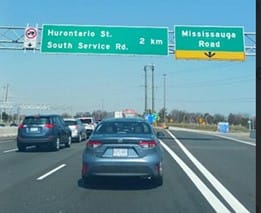
That Was Then, This is Now
Originally I lived in this house from 1961 to 1974. I do not remember the highway.
That is not the same as saying it wasn't there. It was — a modest artery then, carrying modest mid-century traffic between places that people went in the daytime. It had a rhythm; it stopped at night. As, in the way of all things we grow up with, it was simply part of the texture of being here, unremarkable as the sound of the furnace or the particular creak of the third stair.
I returned in 2005. Thirty-one years later, and the house was the same — same bones, same rooms, same light in the kitchen in the morning. But something had changed, and it took me less than a night to locate it. The highway had not merely grown busier. Traffic had become continuous. Somewhere between my leaving and my returning, it had crossed a threshold I cannot precisely identify and become a permanent condition — twenty-four hours, seven days, no intermission, no dark between movements. It had become, without ceremony or announcement, the ground bass of everything.
Is It Just Me?
I noticed immediately. My neighbours, some long-settled and some quite new, do not notice at all. Whenever I raise the subject, they tilt their heads with the expression of someone trying to remember a word, and say “oh yes, there is some background noise, isn't there?” — and, just as often, say they hear nothing. They are not being dishonest. They genuinely do not hear it; the brain, confronted with a non-threatening sound that never varies and never stops, eventually performs an act of quiet mercy and simply edits it out. The cortex stops filing the reports. Life becomes more manageable.
Mine has not done this. I have wondered why.
A Strange Paradox of Hearing Loss
I am close to seventy, and I have the hearing that age delivers: the upper frequencies have gone soft, the high shimmer of the world somewhat reduced. What remains — and what no amount of age seems to touch — is the lower register. The bass. The fundamental. And this is precisely where the highway lives most completely and most physically. Tire friction against asphalt peaks somewhere between 800 and 1,200 Hz — a mid-range rasp — but beneath that, the trucks generate infrasound: frequencies below the threshold of hearing, below 20 Hz, that the ear cannot name, yet the body receives anyway. Through the soles of the feet. Through the sternum. Through the back teeth, on a quiet morning, when you are paying attention.
I am, it seems, constitutionally well-suited to hear exactly the part of the highway that most people’s ears and brains jointly conspire to ignore. Age has not made me less sensitive to it. It has made me more so — tuned, involuntarily, to its lowest and most penetrating frequencies, the ones felt rather than heard, the ones that do not announce themselves but simply arrive and remain.
This is not a complaint I make easily. I am not a fragile person.
A Symphony of Purposelessness
What troubles me is not the sound itself. This is the part that is hardest to explain, and most necessary to try.
The notes are innocent. A diesel engine turning at 1,500 rpm is just physics. Tire contact with aggregate is just chemistry and rubber finding each other briefly and parting. The squeal of air brakes is compressed gas returning to equilibrium. None of these sounds is wrong. Isolated, in another context, they might even be interesting — the way industrial machinery in a museum becomes almost beautiful, the way a recording of a factory floor, played in a gallery, becomes contemplative. I do not object to the frequencies. I do not object to the decibels. What I object to — ‘object’ is too mild a word, but I will return to that — about this noise is its without-end. Without-meaning. Without-consent.
Modal Movement in B Flat
It is a modal voice. I mean this in the musical sense: modal music is not quite major, not quite minor, suspended in a harmonic territory that neither resolves nor departs. It simply persists, unanchored, refusing to arrive anywhere. The highway is exactly this — a vast, unwelcome drone in no key the ear can discern, produced by ten thousand individual purposes that cancel each other into collective purposelessness. Every driver is going somewhere specific, meaning something particular. Together, they produce a sound that means nothing at all. It is the roar of modern purposefulness, generating a noise of total purposelessness.
A voice with no words. A mouth with nothing to say, and no way to stop saying it.
It's the soullessness — not evil, not even hostile, which would at least imply intention. Simply absent an inner life, and pressing that absence against you, hour after hour, in every season.
The Land on Which I Live
I live on the traditional land of the Anishinaabe people, and I find myself thinking about this with increasing frequency. In Anishinaabe understanding — drawn from the work of scholars like Basil Johnston, and from the oral traditions that predate any scholar — sound is not merely physical. It carries communicative intent. The world is understood as animate and communicative: wind, water, thunder, birdsong are not background; they are presences, messages, relations. To listen is an ethical act. To be addressed by the living world, and attend to it, is part of what it means to live well — part of what is called mino-bimaadiziwin, the good life, the life in balance.
Within that understanding, the highway presents something more troubling than noise. It is sound without interiority, emanation without address. Taking up the entire acoustic commons of the landscape — drowning the birds, silencing the rustling particular grammar of this place — it offers nothing in return. It does not listen; it cannot. In the most precise sense, it is a presence with no soul and no awareness of yours, filling the space where meaning might otherwise be.
Some Indigenous scholars have begun using the phrase acoustic colonialism for exactly this: the imposition of industrial sound onto a landscape without consent, the erasure of the sonic relationships that sustained it. I did not have that phrase when I first returned to this house and lay awake listening. But I had the feeling it names.
Mourning the Loss of Spiritual Satiety
What the highway has taken — and this is what I most want to say — is not quiet exactly. Silence is too pure a word for what I am mourning. What it has taken is spiritual satiety. That condition of having received enough from the world around you — of having been addressed by it, in its ordinary way, the wind moving through particular trees, a specific bird making its argument at dawn, rain on a known roof — and finding that it is sufficient. That you are, for this moment, sated.
The Meaning of Inconsolable
What replaces it is not its opposite. Not torment. Nothing so dramatic. It is a pebble in the shoe. A splinter. The piece of grit in the salad that you cannot stop finding with your tongue, every time, without exception, in every bite. It is the anguish that sits below the register of anguish — the disturbance that is too constant to be acute, too inescapable to be processed and set aside. You cannot be consoled for it, because it is not yet over. It cannot be resolved, because it does not stop.
My neighbours have made their peace. Their brains have edited it out. I understand this; it is a kindness the nervous system performs, a mercy. But I sometimes wonder what else is being edited. Whether the habituation extends beyond hearing — whether the slow, continuous pressure of a sound that has nothing to say is doing something to the quality of interior life that we have not yet found the instruments to measure. Whether this is happening not just to my neighbours, but everywhere, to nearly everyone — a generation living inside an insensible orchestra, slowly losing access to the silence in which they might hear themselves think; losing the spiritual satiety of a world that addressed them, and could be addressed in return — experiencing the loss as nothing more specific than a vague insufficiency, a sense of something missing they cannot name, because they cannot remember what it was.
My Arm in the Air
At moments like these, there is a kindergarten memory I return to.
The teacher was conducting a Simon Says exercise — nod your head, jump up, sit down, stand up — the ordinary choreography of early childhood compliance. When she raised her right arm, every child facing her raised their left. Which is what you do. Which is what mirroring means. This is the perfectly sensible and socially harmonious response to the situation.
I was adamant that everyone was wrong. I raised my right arm — the matching arm, I maintained, the correct arm — and, keeping it elevated, trotted to the front of the room and turned to face the class. “See,” I said, with the serene confidence of a five-year-old who has not yet learned that being right and being welcome are different conditions. “It’s this hand that is the same.”
The teacher told me, with increasing firmness, to sit down.
Standing at my window now, listening to the highway that my neighbours do not hear, I feel the precise texture of that moment — the absolute clarity of being technically correct and situationally impossible. I noticed then what others weren't noticing and didn't care to. I notice now. The arm is still in the air. The teacher has merely changed. It is a particular kind of loneliness, this — not the loneliness of being misunderstood, but of being understood perfectly and simply not agreed with. They hear the highway when I point to it. They shrug and return to their lives. I have not yet learned to shrug.
Perhaps I never will. Decades of sitting down under sufferance, and still: the same child, the same raised hand, the same insistence that everyone is looking in the wrong direction.
Still here. Still annoying. Still noticing.
The highway does not know any of this. It has no idea I exist. It was playing before I came home, it will be playing after I leave, and it has never once had anything to say.
That is the whole of it. A modal voice, endless, soulless, and here.
─── ❖ ── ✦ ── ❖ ───
The Science Behind the Noise
For those who want a grounding in science, here are some symphonic points of reference:
The grey symphony in B-flat: Highways tend to generate noise around 60–80 Hz, roughly in the range of B-flat, the note Pythagoras might have hated given his obsession with perfection, with pleasing musical intervals, the harmony of the spheres, and… well, it’s complicated
The infrasonic pedal tone: Heavy trucks generate infrasound below 20 Hz, felt in the chest and sternum more than heard; the bass note under everything.
A Doppler fugue: Each passing vehicle shifts pitch as it approaches and recedes, creating a continuous, overlapping fugue of frequency changes. Think Bach.
The grinding continuo: In Baroque music, the continuo is the unceasing harmonic backbone; highway noise is exactly that.
Spectral din: Across the full frequency spectrum, from infrasound rumble to the hiss of tire-on-asphalt white noise
An asphalt choir: Thousands of tire contact patches, each one a brief, percussive phoneme
Physics and Hertz
Tire-pavement noise peaks around 800–1,200 Hz — a harsh, mid-range rasp, like a snare brush on concrete.
Engine and exhaust fundamentals sit at 80–200 Hz — the cello and trombone section.
Truck air brakes produce sharp transients with energy up to 4,000 Hz — the piccolo shriek in the orchestra.
Infrasound from heavy vehicles (below 20 Hz) is felt as vibration, pressure, a kind of sub-audible dread — the organ pipes the ear cannot discern.
Decibel-wise, a busy highway runs 70–85 dB(A) (A-weighted, how humans perceive loudness) but much higher in dB(Z) (unweighted, flat response), because of all that infrasonic energy the A-weighting filter throws away.