The Doctrine of the Shed: From Corporate Pews to Cable News — A Confession
Or: What We Talk About When We Don’t Want to Talk About What We Should
Picture this.
It is the mid-1980s. I am a corporate trainer — or, more precisely, a facilitator, a distinction I will return to, since it was not accidental — delivering talks and courses with titles like Participatory Management, Managing for Success, Understanding Personality Quadrants, Assessing Motivational Values, and Developing Your Mission Statement. Riveting materials. Cutting edge. Forward-thinking. At the time.
The venue is a hotel meeting room — the kind that exists in a particular tier of expense and upholstery, where the carpet is deep enough to muffle both footsteps and doubt, and the table linens hang to the floor with the gravity of an institution that takes itself seriously. At the back, a catered breakfast table: croissants, urn coffee, real cream (no plastic creamers — we are not peasants), two types of sugar, three artificial sweeteners for the health-conscious, mixed muffins, little dishes of jam and marmalade, and a small arrangement of hotel brochures that no one has touched and no one will. There is an overhead projector. There are blank flip charts. It is 1988, and this is the technology of ideas.
I am wearing the full regalia of the era: tasteful navy suit, skirt cut just above the knee, jacket with shoulder pads — not Joan Crawford, but approaching the neighbourhood. Too-high heels. Dark-toned business hose. A bright wrap-around blouse. A matching briefcase and leather folder. A day-timer, because this is long before ThinkPads and electronic notebooks, and a woman who has her schedule inscribed in genuine leather is a woman who cannot be easily dismissed. We knew what we were doing with our clothes, even if we were not entirely permitted to say so.
The room is full of the corporate tribe in its natural plumage. A few senior executives, slumming with the benign condescension of those who are really there to assess the materials for future seminars — bishops, in effect, deciding which doctrine would be propagated further into the organization. A smattering of senior managers and junior up-and-coming types: project managers, sales, operations. And some women, managing customer service departments, whose staff had not yet suffered the indignity of being renamed associates. Their attire mirrors my own. We are all members of the same order, dressed for the same rites.
Some are there to assess. Some genuinely to learn and grow, leaning forward rather than slumping back in anticipatory judgment. They are keen. They are a trainer’s choir, the faithful occupying the corporate pews. And a few among them are something more — those who have made the quiet, slightly illicit connection that some of this corporate shilling might actually furnish them with life skills they could use in their relationships and their real lives. If I could have winked at them in conspiratorial camaraderie, I would have. But I wasn’t being paid for that.
Then there is a third category: those present because they had done something good and were being rewarded with a corporately palatable vacation day.
It was, as I said, facilitation. Never training. The distinction was intentional and precise. To facilitate was to accompany participants on a journey of self-discovery; to train was to suggest that they didn’t already know things, which was impolite and, in some organizational philosophies of the era, practically actionable. We facilitated the delivery of a process. We taught nothing. The doctrine was delivered as discovery, in a hotel, with real cream, and occasionally it even worked — which is the most unsettling thing I can tell you about it.
It was, in its way, a church. Complete with doctrine, ritual, vestments, and the unspoken understanding that the point was partly devotion and belonging, not merely learning. The overhead projector was the altar. The flip chart was the scripture, yet to be revealed. The catered breakfast was the fellowship hall. And, standing at the front in my shoulder pads and my leather day-timer, I was the priest.
Some in the congregation would return to their organizations as minor deacons of the faith. Carrying the doctrine one level down. Propagating, in the weekly staff meeting, whatever fragment of the seminar had proven most repeatable, most graspable, most useful for the purposes of a 15-minute Tuesday. Probably with a certificate.
─── ❖ ── ✦ ── ❖ ───
It is in this context — this particular theatre of serious intentions and managed complexity — that I delivered a story. Not a case study. Not a module. A story. It was part of a session on organizational decision-making and the peculiar ways in which intelligent people, gathered in rooms, reliably fail to make good use of their intelligence.
The story came British historian and naval scholar Cyril Northcote Parkinson, who was, before anything else, a satirist — a man who looked at the postwar British bureaucracy and found in it material so rich, so perfectly absurd, that he could do nothing useful with it except write it down with great precision and call it a law.
He published his observation first in The Economist in 1955, then collected it into a book, Parkinson’s Law, in 1957. The work is better known for its first and most famous proposition — work expands to fill the time available for its completion — which has the ring of something everyone already suspected but no one had previously committed to print. The second law, the Law of Triviality, is less celebrated but arguably more exact. It is also, in my experience, more uncomfortable to sit with, which is perhaps why it receives less attention. We tend not to dwell on mirrors that are too accurate.
Parkinson arrived at his Law of Triviality by way of a story. A committee — fictional, but of the bureaucratic genus that required no particular imagination to invent — has two items on its agenda.
The first is a proposal for a nuclear reactor. Multi-million-dollar infrastructure. Enormous technical complexity. Consequences measured in decades and considerable acreage. The committee examines it briefly. The subject is, frankly, beyond comfortable engagement; no one in the room feels fully equipped to interrogate it, and to admit this is to admit a gap, and to admit a gap is — well…. The item passes with minimal discussion. Next.
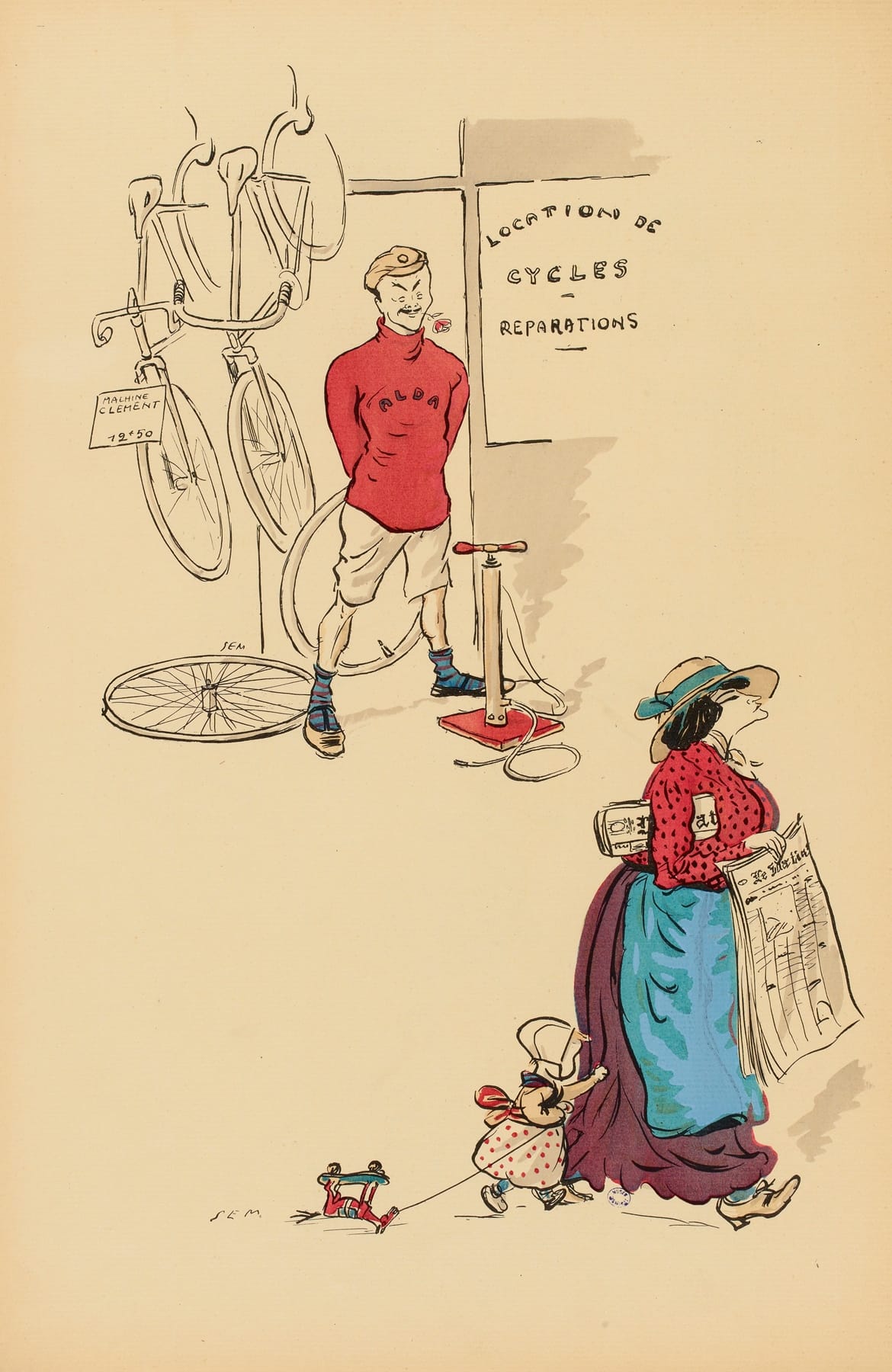
The second item is a proposed bicycle shed for staff. Cost: three hundred and fifty dollars. The committee, which has been somewhat muted on the question of nuclear fission, erupts into vigorous life. Where should the shed go? What roofing material is appropriate? And — the question that consumes the better part of the available time — what colour should it be painted?
Everyone has a view on a bicycle shed. Everyone can picture one. Everybody has, at some point in their life, formed an opinion about roofing materials or paint colours, and that opinion has been waiting, patient and underused, for exactly this kind of legitimate organizational outlet. The nuclear reactor offered nothing to grab hold of. The bicycle shed offers everything.
The meeting concludes. The reactor is approved. The shed is debated to a well-upholstered standstill, referred to a subcommittee, and tabled for next month.
Parkinson called this the Law of Triviality: organizations devote time and energy in inverse proportion to the importance of the matter under discussion. The more complex and consequential the issue, the less time it receives. The more accessible and manageable the issue — the more it resembles a thing anyone might have an opinion about — the more it expands to fill the room.
He was, it is worth noting, writing as a satirist. He would have found the subsequent fate of his observation — absorbed into corporate training culture, delivered in hotel ballrooms, reproduced on flip charts with real cream available at the back — a fairly elegant demonstration of his own point.
─── ❖ ── ✦ ── ❖ ───
The Room
The story lands well. It always does.
There is a particular quality to the laughter it produces — not the sharp bark of something genuinely surprising, but the warmer, more satisfied sound of recognition. Of course. Yes. They have seen exactly this. In the budget meeting of the 2nd quarter of 1983. In the facilities committee. And in every session where the large, consequential, frightening thing was quietly set aside in favour of the thing that everyone could comfortably have opinions about.
They nod. They exchange the small, knowing glances of people whose interior monologue has just been read aloud by a stranger.
Of course, they had never behaved this way themselves. At most, they had stood — or sat — quietly observing human nature with an interior cluck-clucking, privately noting the dynamic with the detached appreciation of anthropologists who happen to be present at the ritual but are decidedly not participating in it. They had never named it. Had never called it out for what it was. That would have been corporate suicide, and they were not, on balance, suicidal. But it was deeply satisfying that their inner conversation had been memorialized by an outside party. A British one, no less. With a law named after him.
A break is called. The congregation mingles at the back table — urn coffee, real cream, now bagels and cream cheese, some crudités (not quite charcuterie; this is the 1980s, not the 1990s, and we have not yet reached the era of the grazing board). There is cross-talk and more chuckling, some anecdotal stories shared in the slightly looser register that a break permits. Someone has a story about a three-hour meeting devoted to the colour of the new company letterhead. Someone else raises the matter of a task force convened specifically to evaluate the ergonomic considerations in the office chair procurement process. There is nodding. There is the companionable warmth of people who have found, briefly, a common language for a shared experience.
The break ends. Everyone returns to their assigned pews.
The flip charts begin to flip. I, the facilitator, stand at the front asking for insights and feedback, noting the comments in careful, legible marker strokes — which is, I should say, a trainer’s method of controlling the room. Of managing the feedback toward the conclusions that can be usefully presented later to the section of management paying my bill. This is not cynicism. It is craft. The comments are real; the selection is curated. The participants feel heard, because they are, to a meaningful degree, heard. Everyone benefits from this arrangement. It is, in its modest way, a fairly successful example of participatory management in action.
No one notices that the bicycle shed is actually being constructed.
Thank goodness.
* * *
Here is what Parkinson observed in 1957, and what I observed in that hotel meeting room in the 1980s, and what has not changed in any organizational setting since: awareness of a dynamic is not the same as immunity to it. The room recognized the bicycle shed story immediately, with rueful, appreciative laughter — and then spent the remainder of the session doing precisely what the story describes. Generating heat around the accessible, manageable, conversationally comfortable aspects of organizational behaviour, while the larger and more frightening questions — about power, about structural incentive, about why the paint is always already green — went as undiscussed as the nuclear reactor.
The people in that room went back to their offices. Some became minor deacons of the faith — carrying the story with them, deploying it in their own meetings, to the same warm laughter, the same rueful nodding, the same comfortable sense that naming the thing was more or less equivalent to addressing it. The bicycle sheds kept being built. They are still being built. The construction has simply gotten louder, faster, and considerably better funded.
─── ❖ ── ✦ ── ❖ ───
The Department That Has Always Known
Before we leave the hotel meeting room entirely, it is worth pausing on the women managing the customer service departments. Sitting in their navy suits in the corporate pews, they follow the proceedings with the particular alertness of people who have learned to be alert.
Customer service in the 1980s occupied a curious organizational position: it was the department that handled the most direct, complex, emotionally loaded human contact the company had with the outside world, staffed predominantly by women, measured by metrics designed to reduce rather than understand that contact, and consulted last — if at all — when strategic decisions were made that would determine the nature of that contact. It was, organizationally speaking, the bicycle shed made flesh. Everyone had opinions about it. No one allocated it serious structural weight.
The staff had not yet been renamed associates. That indignity was still a decade away, arriving in the 1990s as part of the broader movement to signal respect through nomenclature rather than through compensation, consultation, or genuine organizational power. From clerks to representatives to associates to experience specialists — a terminological escalation that has moved in precise inverse proportion to any corresponding improvement in working conditions or institutional standing.
The bicycle shed, painted repeatedly. Different colours. Same shed.
In the decades since, customer service has been the department most systematically hollowed out by every technological efficiency measure, most reliably cited in annual reports as a priority, and most consistently defunded in actual budget cycles. It has been outsourced, off-shored, automated, and finally handed, with some corporate fanfare, to chatbots — which are patient, inexpensive, and entirely incapable of the thing that made those departments valuable in the first place.
The women in those rooms understood the dynamic Parkinson described, I think, rather more personally than the men. They had been living inside it.
─── ❖ ── ✦ ── ❖ ───
The Talking Heads
Parkinson was writing about committees. He could not have anticipated what a committee looks like when you give it a television studio, a satellite uplink, a panel of six confident people with microphones, and twenty-four hours to fill.
Cable news punditry — which was just beginning its transformation at the precise moment I was standing in those hotel rooms, The McLaughlin Group having launched in 1982, Crossfire already running — industrialized the Law of Triviality in ways that would have astonished even its author. The format is, structurally, the bicycle shed story rendered as programming: take a room of people who are comfortable and articulate and have strong opinions, point cameras at them, and observe which topics generate the most vigorous, accessible, entertaining disagreement.
It is never the nuclear reactor.
The reactor — monetary policy, systemic institutional failure, the slow structural erosion of things that take decades to build and are not visible until they are gone — does not make good television. It requires too much prior knowledge, offers too few obvious villains, and resolves on a timeline that is incompatible with the evening segment. The bicycle shed, by contrast, is perfect. It is visual. It is emotional. Accommodating confident opinions from people with no particular expertise, it produces the specific quality of heat that registers as engagement without requiring anyone to have thought very carefully.
The talking heads have refined this to an art form. They are not, for the most part, cynics — which is the uncomfortable part. Like the president with his free green paint, they are genuinely engaged in what they are doing. They have simply learned, through years of institutional incentive, that certain topics produce the lean-forward, and certain topics do not, and that leaning forward is what the medium rewards.
The audience, for its part, has learned the same lesson. We recognize the nuclear reactor when it appears. We feel, briefly, the weight of it. And then someone says something outrageous about the bicycle shed, and the panel erupts, and we are, in some limbic and entirely human way, relieved.
(The paint, and the president, and the woman who knew which way the wind blew — that is a longer story, told in full over at The Cornfield and the Meeting Room.)
 Denise Choppin
─── ❖ ── ✦ ── ❖ ───
The Stakes Get Larger
Here is where I should tell you that things have improved since 1957, or since 1985, or since the turn of the millennium. That we have, collectively, developed better mechanisms for attending to the reactor while the shed takes care of itself.
I cannot tell you that.
What I can tell you is that the reactor has gotten considerably larger, and the shed debates have gotten considerably louder, and the gap between the two has become one of the defining features of public and organizational life in the early 21st century. We are living, at this particular moment, through the most significant technological transformation since the Industrial Revolution — one that raises genuine and unanswered questions about labour, cognition, creative authorship, institutional power, privacy, and the nature of human decision-making itself. These are the reactor items on the agenda. They are complex. They are frightening. Moreover, they require expertise most of us do not have and time most of us cannot find.
And so we discuss, with tremendous energy, the things we can picture.
We debate whether AI-generated art is really art, a question that has the appealing quality of being both genuinely interesting and entirely manageable, since it requires no technical knowledge whatsoever and accommodates the widest possible range of confident opinion. We argue about chatbot tone. And we perform anxiety about AI replacing our specific jobs — a legitimate concern, dressed in the more comfortable clothes of the personal and the immediate — while the systemic questions about who owns the infrastructure, who profits from the displacement, and what institutional frameworks might actually address the transition are discussed, if at all, in rooms that most of us are not in and were not invited to.
The nuclear reactor hums along. The bicycle shed gets seventeen opinion pieces a week.
There is also this: AI systems can now produce sophisticated-sounding analysis of complex topics on demand, which has introduced a new and somewhat vertiginous wrinkle. It is now possible to feel that one has engaged seriously with the reactor — to have read a fluent, well-organized summary of the issues, to feel informed — without having done the slow, uncomfortable, expertise-requiring work that genuine engagement demands. The shed gets debated. The reactor gets summarized. The summary gets mistaken for understanding.
Parkinson would have found this, I think, a remarkable development. Not a surprising one. But remarkable.
─── ❖ ── ✦ ── ❖ ───
The War Stories
When I sense that someone might be interested in hearing a corporate war story from the olden days — the 1970s, the 1980s, the 1990s, even the 2000s — or when someone feigns polite interest with the particular glassy warmth of a person who has decided that listening is the easier option — I tell them the story of the bicycle shed.
It is not unlike, I realize, a beer-bellied old veteran at the end of the bar, holding forth on lumbago and a condition no one under 60 has ever heard of. There is the same quality of investment in the telling. The same assumption, not entirely warranted, that the audience shares the reference points. The same slightly too-long pause before the punchline, because the punchline has been earned over decades and deserves its moment.
And yet the story continues to be fresh. The chuckle is the same chuckle — that warm sound of recognition, of yes, of course, I have sat in exactly that room. Because they have. Everyone has. The bicycle shed is apparently indestructible, which is more than can be said for most actual bicycle sheds.
If I am given any encouragement at all — a raised eyebrow, a follow-up question, the absence of an obvious exit — I launch into the 1950s history of Parkinson’s Law. The satirist. The Economist. The fictional committee and its nuclear reactor. Most have either forgotten or never heard of it, and there is something quietly satisfying in returning the story to its origins, in noting that a man writing about postwar British bureaucracy in 1955 produced something so precisely observed that it has survived every subsequent iteration of organizational life without requiring a single revision.
If I were still facilitating, I would have lost the room at that point. History requires a tolerance for complexity that the 50-minute session rarely permits. But I am not facilitating anymore. I am telling a war story at the end of the bar, and different rules apply.
─── ❖ ── ✦ ── ❖ ───
All those deacons. All those prophets who received the tablets from the mountain on high — who sat in the upholstered pews, who drank the urn coffee with real cream, who laughed at the bicycle shed story and went back to their organizations carrying the received wisdom in their leather binders and their day-timers and their SMART goal worksheets.
Their stories died.
Not the story — the story of the bicycle shed is, as I have said, indestructible. But their stories. The particular texture of what they carried back. The Monday morning debrief to their team. The one insight that stuck, that they tried to apply, that ran into the usual structural resistance and was quietly set aside. The binder that went into the drawer. The flip chart notes that were transcribed into a memo that was distributed and filed and not read again.
The doctrine propagated downward and thinned, as doctrine does, until it was mostly vocabulary. Participatory. Facilitated. Empowered. Words that retained the shape of the ideas they had once contained, without the weight. The weight had been left behind in the hotel meeting room, somewhere between the crudités and the flip charts, in a building that has probably since been converted to condominiums.
This is not a lament, precisely. It is more of an observation, made from sufficient distance that it can be made without particular bitterness. The people in those rooms were not foolish. They were not passive; they were intelligent human beings operating inside institutional structures that were, as institutional structures tend to be, more durable than the individuals within them. They took what they could carry, And they carried it as far as the structure permitted. Then the structure reasserted itself, as it always does, and the paint turned green, and the bicycle shed got built.
─── ❖ ── ✦ ── ❖ ───
The reactor hums
he shed is still being built. It is being built right now, in organizations that have replaced the overhead projector with the slide deck and the day-timer with the productivity app, and have renamed the facilitator a change management consultant, and serve artisanal coffee at the break table instead of urn coffee, though notably still with real cream, some things being apparently non-negotiable.
The nuclear reactor on the current agenda is larger than any Parkinson imagined. It hums in the background of every organizational meeting, every news panel, every public conversation about the present and the future. It is frightening in the specific way that things are frightening when they are too large and too complex to look at directly, and when looking at them would require us to sit with genuine uncertainty for longer than the available format permits.
And so we discuss the shed. We discuss it with tremendous energy and considerable sophistication. We have developed new and elegant languages for discussing the shed. We have podcasts about the shed. We have opinion pieces and panel discussions and social media threads and, now, AI-generated summaries of all the previous discussions about the shed, which are fluent and well-organized and create, in the reading, the sensation of having engaged with something more substantial than a shed.
Parkinson, I think, would not have been surprised. He would have recognized the room. He would have helped himself to a croissant — or, this being a later decade, a small handmade pastry with an unpronounceable name — and settled in, and watched, with the patient, slightly melancholy amusement of a man who wrote the law and was not under any illusion that writing it would repeal it.
It’s a very good meeting.
It’s a very good life.