Consensual Hair Cutting and Money Sharing: Two Modern Fairy Tales
A note before we begin: What follows is a work of allegorical fiction. Any resemblance to real individuals, living or dead, is a function of the universality of the situations described, not of any intention to depict specific persons.
Recently, the conclusion of a high-profile sexual assault trial involving young athletes got me to thinking…
Consensual Hair Cutting
In a far — or not so far — away land, a woman's hair was not just her "crowning glory." It was a measure of her worth.
In this land, hair was considered the most beautiful asset a woman could have. Her hair was a symbol of her femininity, her desirability, and how she handled her hair — and how she permitted others to handle it — was deeply tied to her personal and societal worth.
Most of the people in this land, called Londinium, could only grow sparse or stringy hair. But some were blessed with abundant tresses. It was considered a gift of their god, and indicated the woman's worth — both physical and moral.
The sexual act between a man and a woman was connected to the woman's hair. Men derived the ultimate physical pleasure from running their hands through a woman's hair — whether the hair remained on the woman's head or whether it was cut. And a woman could only conceive once a man had cut her hair.
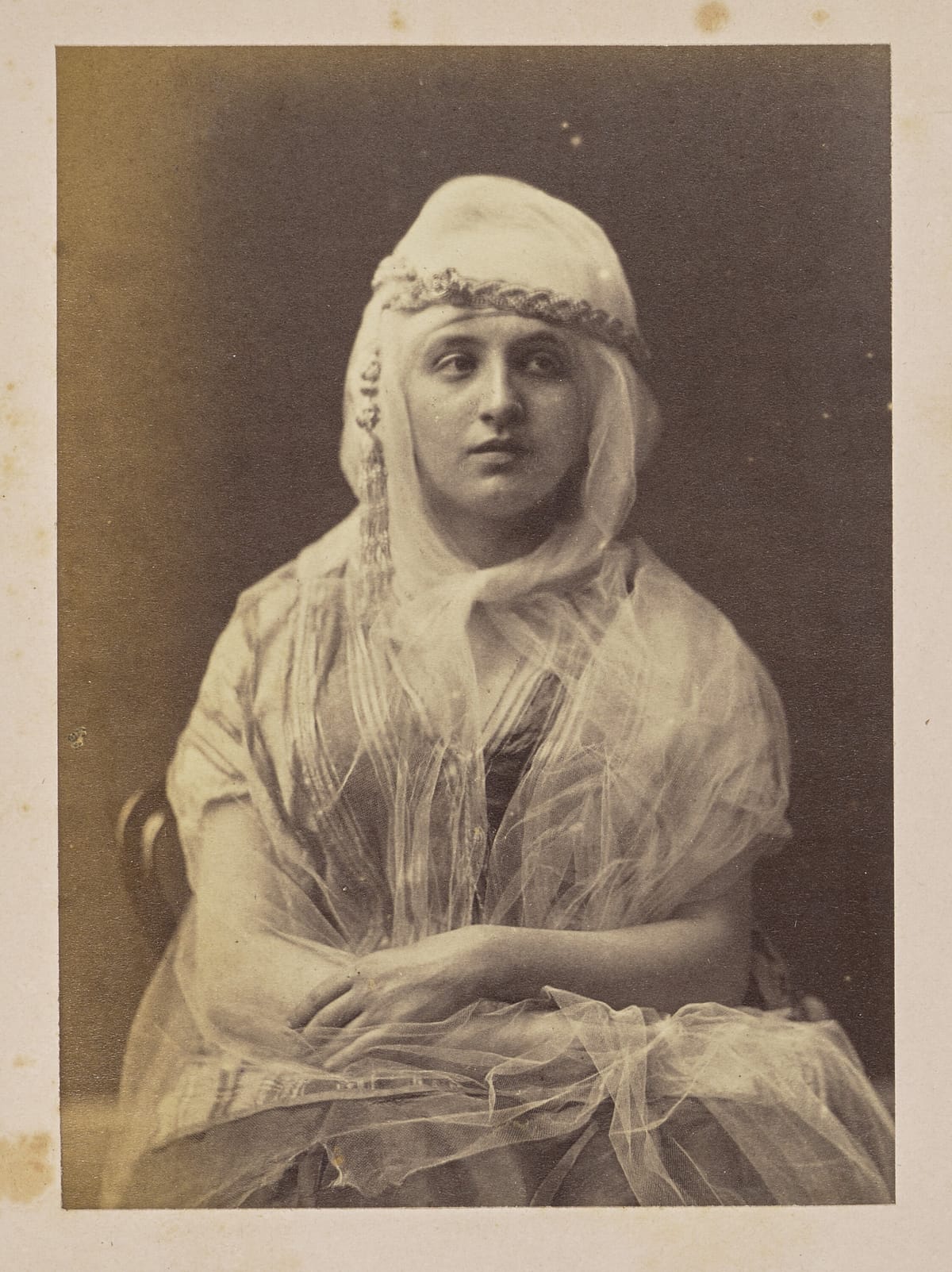
All decent women covered their hair with headdresses — some elaborate, some plain. Some headdresses gave the impression that the woman had more luxurious hair than she possessed; there were special pads that could be inserted to provide that effect. A decent woman only uncovered her hair in the presence of family members or upon her engagement to be married.
And importantly, once hair had been cut, it could not grow back. She would, in a sense, be damaged goods — no longer considered top-tier wife material.
Sometimes women — those considered promiscuous — allowed some tresses to protrude from their headdresses and permitted non-family men to touch, and even to cut pieces of, their hair. Sometimes, after the fact, some of these women claimed that they had not consented to the clipping and charged the men with the crime of "cutting."
From a legal standpoint, consensual cutting was not a criminal offence. Incidentally, young girls — those under sixteen — were considered too young to consent to anything.
Although the law did not specifically permit previous "wanton" behaviour to excuse non-consensual cutting, a stigma existed nonetheless. If a woman had been known to flaunt her mane, and were she later to bring a charge of "cutting" against a man or men, there would generally be an outcry: she was asking for it.
If she had given consent at any point, her loss was her own. The onus fell upon her to prove lack of consent. And if a group of men was involved, she would need to provide proof that each and every cutting had been non-consensual.
In this land there lived a young woman — let us call her Mane — who one evening found herself in the company of several celebrated athletes who were marking a sporting victory. She had met one of them, a player we will call Hawk, at a public gathering place, and had agreed to accompany him to his lodgings, where she consented to some cutting with him alone.
Then more of Hawk's teammates arrived. Mane would later say that several of them proceeded to touch and cut her hair without her explicit consent — that she had grown frightened, that fear caused her mind to leave her body, that she had been given drink she had not sought, and that hands had been placed upon her hair without invitation.
The men told a different story.
At trial, the defence dismantled Mane's account piece by piece across nine days — seven of them given over to cross-examination. They noted that she had been drinking before the encounter. They argued that she had not merely consented but had initiated — that she was the aggressor, not the victim. They described the athletes as bashful and uncertain, boys who hardly knew what she was asking of them.
When Mane testified that fear had caused her to "leave her body," the defence counsel mocked the expression openly, rechristening this dissociative state the arrival of "Funny Mane." The gallery, one imagines, appreciated the wit.
Twice during the encounter the men had filmed Mane responding to the question, "Is this consensual?" — to which she replied, "What happened was consensual." The presiding magistrate found this filmed declaration persuasive. She saw nothing remarkable in a woman being asked to provide, in the midst of events, a recorded statement of her own consent.
The law of the land held that consent must be continuous and specific — given freely to each separate act, and not extractable after the fact under duress. No matter. The magistrate was satisfied. The men went free.
Mane is now living some sort of life. The celebrated athletes are living theirs.
Now consider a different kind of asset. One that men, too, possess. One that, when taken without permission, the law has never had any difficulty calling by its right name.
Consensual Sharing of Money
In another land — perhaps not so far away — a young man named Monty came into a large sum of money through a winning lottery ticket. He was, by most accounts, a quiet and insecure soul, somewhat slight of build, and given to the admiration of sporting heroes.
On the day of his windfall, he arranged to have his winnings paid out in small bills. He then made his way to a public house where his idolized sporting team was gathered in celebration of a recent victory.
At the bar, Monty met his idol, a celebrated player we shall call Hawk. Monty drank rather a lot, let his bills be seen, and suggested that he and Hawk adjourn to the latter's hotel room, where he would share some of his money.
Once there, Monty gave Hawk a considerable sum. Then several of Hawk's large and athletic teammates entered the room, and each demanded money in turn.
When Monty later brought suit against Hawk and his companions for non-consensual money exchange — essentially, robbery — the court convicted the athletes on all counts.
The defence had argued strenuously that Monty had come willingly, that he had initiated the encounter himself, that he had tempted the players by openly displaying his cash. The court was unmoved. Even when presented with filmed evidence of Monty stating his consent in the moment, the magistrate found that the declaration had been made under evident duress — the product of fear, not free will.
The athletes were convicted. The money, sadly, was long gone. Monty was left with little to show for his ordeal beyond the experience of having told his story to a court that, this time, had chosen to believe him.
These are fairy tales, of course. Nothing in them is real.
The hair is not hair. The money is not money. Londinium is not London or any city you might find on a map.
But the logic — the precise, consistent, internally coherent logic applied to the question of what constitutes consent, what constitutes proof, what constitutes a credible victim — that logic is not invented.
It has merely been moved to a place where we can see it more clearly.
Would you like to read other posts? If so, please click the Home Page link below: