A Folktale of the Dolomites and the Origin of Edelweiss
This story explains the origins of the edelweiss flower and why the Dolomite peaks are so hauntingly bare.

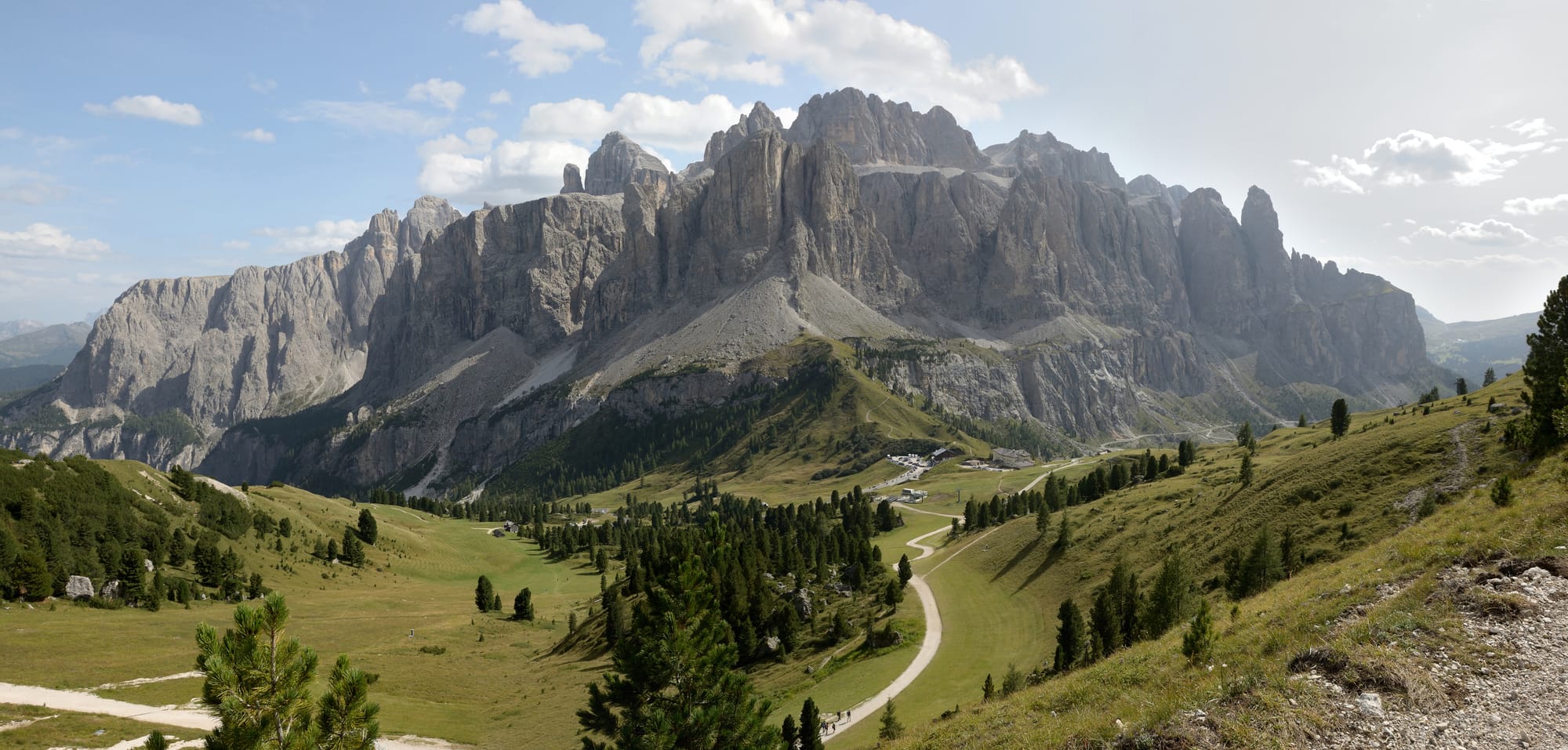
Here is another ancient folk tale from the Dolomites, a mountain range in the Italian Alps. The stories from that area are not “typical” of the fairy tales from other regions, and have a unique take on nature.
Once Upon a Time… Hundreds and Hundreds of Years Ago
In the southern part of the Italian Alps, in a land with rich pastures, green trees, black rocks and shady groves was a small kingdom. This land was ruled by a king (whose name is long forgotten), and this king had one beloved son. The king was a good man, and his people – mostly shepherds and hunters – were happy.
The only unhappy person in the kingdom was the King’s son. His name too is lost to time, so we can only call him the Prince. This prince was obsessed with a desire to go to the moon. He asked every wise man and wise woman he could find to advise him, but no one knew the answer.
The Prince’s obsession only deepened, and from morning until well into the night he would wander disconsolate, through the mountains and valleys, constantly gazing at the moon. The King called his physicians to see whether the Prince could be cured of this malady, but no one seemed able to help.
In an attempt to distract the Prince, a group of fellow noblemen took him out hunting. While with them, the Prince became disoriented and his horse wandered away from the group. He was lost. Eventually he reached a lonely, high valley covered in Alpine roses and surrounded on three sides by imposing towers of rock.
He became tired and decided to lie down among the roses, and sleep. He then had a strange dream where he saw himself in an odd valley filled with unusual flowers and where he met a beautiful woman. The Prince was holding a bunch of red Alpine roses, but the girl was completely dressed in white, and everything around her was bright and shining. She asked him about his country and his colourful roses. When he asked her about her home she explained that she was the daughter of the Moon King.
Overwhelmed and overjoyed, the Prince awoke. It was well past midnight and as he looked up at his surroundings, he grew sorrowful once more as he did not know how he could meet the Moon Princess again.
Disconsolate, he began to gather the roses that the Moon Princess so admired, and while he did so he began to hear voices high up in the clefts of the mountains. The Prince knew that demons lived in the high cliffs, but despite the danger he climbed higher and higher, and the voices became clearer as he did so.
Clambering ever higher, he was enveloped by a cloud and could no longer see anything around him. He felt along the cliff face and found something smooth and hard — a door! He pushed, and it opened into an illuminated space, where two small old men were sitting and talking. The two men were very frightened when the Prince stumbled in, but he explained how he was lost and meant them no harm. Reassured, the three began talking, and the Prince asked if they were “Old Men of the Mountains”, beings that he had heard about before. They replied that they were in fact people of the Moon, that they had travelled to Earth as visitors and were about to return home.
The Prince was ecstatic. Finally, someone could tell him how to travel to the Moon! The two men said he was welcome to join them right away – all he needed to do was ascend upon the cloud just outside the door and it would take them all to their lunar home.
While making the journey, which took some time, the two men explained that although a man of Earth could visit the Moon, it was not advisable to stay overlong. Everything on the Moon was a bright and dazzling white, and the eyes of an Earthman would eventually become blind. Furthermore, the reverse was true for the people of the Moon. Over a period of time on Earth, the Moon people would be deeply saddened by the dark colours of the land and would die from pining for their bright and dazzling home.
Eventually, the cloud landed on the Moon; the two men took their leave of the Prince, telling him that their homes were in the west, while the Prince would want to travel east to the city, where he would find the Princess.
And so the Prince travelled east, going through a white land, with white trees, flowers, marble and stone. In the distance he finally saw a white castle. While making his way there, he stopped to speak with a gardener who was intrigued by the red flowers the Prince still held in his hands.
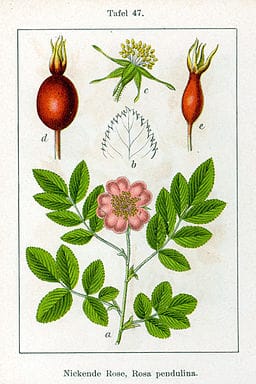
The Prince explained that where he came from — Earth — there were flowers of many colours and that he had come such a long way to meet the Princess. The gardener said that the Princess was known to love flowers, so the Prince would surely be welcomed into the palace.
Indeed, the Prince was welcomed and met with both the Moon King and his lovely daughter — who he immediately recognized as the woman from his dream.
The Princess was delighted with the flowers and was intrigued by the stories the Prince told of his home on Earth. And so, the Prince was welcomed as a guest in the palace of the Moon.
After some time, the King asked the Prince how he liked being on the Moon. The Prince told of how he loved the Moon, but that the brightness of everything was hurting his eyes and that he feared going blind if he stayed much longer. The Princess exclaimed that he would surely grow accustomed to its shining vistas, but a wise man at their court said, no, he would go blind like others before him.
Meanwhile back on Earth, the hunters who had accompanied the Prince before he was lost were searching everywhere to find him, but without success. The King, desperate to find his son, sent out a proclamation through the land announcing that a great reward would be given to anyone who could find the Prince. However, no one could find him, and everyone presumed he had died somewhere in the mountains.
Then, one happy day, the Prince reappeared in the kingdom of his father, bringing the Moon King’s daughter with him, as his wife. The entire population rushed to see this Moon Princess, wondering what she might be like. They found that she was indeed beautiful but not very different from Earth women — except that she exuded a brightness that would dispel any shadows in her vicinity.
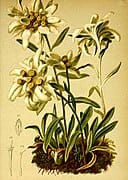
The people greatly admired the white flowers she had brought with her — edelweiss — which now cover the Alps to this day.
For her part, the Princess loved the Earth landscape, the colours, the trees, the valleys; she praised the variety of everything, saying that the Moon in contrast was so monotonous. The Prince was delighted that she found his home so much to her liking. And so things went well for some time.
Then, one evening, he found the Princess standing on a balcony, staring sadly at the vista before her. He asked why she looked so glum, and she replied that despite the beauty of the Earth landscape, she was becoming overwhelmed with nostalgia for her white home and was finding earth colours oppressive. She felt she might die from sorrow, languishing for light.
The Prince hoped he could cheer her up by distractions and parties, but her sorrow deepened. She grew pale and weak, and stared at the black rocks of the mountains, finding them frightening. Then, at night, she would fixate upon the Moon for hours on end.
Then the Moon King himself came to see his daughter. Finding her so close to death, he insisted that she must return to the Moon, adding that the Prince was welcome to accompany her.
The people of the Prince’s kingdom, hearing of these events, now turned upon him, encouraging him to release and leave his wife. They reminded him of all he had on Earth, of the people he was responsible for, and suggested that in time he might find another wife — this time a woman from Earth.
The Prince would not listen, still being deeply in love with the Moon Princess, and elected to return with her to the Moon. Almost immediately the Princess regained her health, but to everyone’s dismay, the Prince almost as quickly began losing his vision.
Both the Moon King and the Moon Princess begged him, for his well-being, to return to Earth; reluctantly he did so, heartsick and forlorn.
Back on Earth, the Prince grew morose, desperate from Moon-sickness and missing his beautiful wife. He no longer spent time with others, only wandering through the mountains and valleys, sleeping outdoors and staring up at the Moon.
For weeks the Prince wandered, until one evening a thunderstorm caused him to shelter in a mountain cave. There he found a small man, only three foot tall but with a long beard and a golden crown upon his head. This man was the King of the Salvans[1]. This King told the Prince of his sorrows: The Salvans were a little people, living far to the east, and they had been invaded by strange and foreign warriors. Those not killed were forced to flee, now wandering from one kingdom to another, merely seeking a quiet place to live. But everywhere they went, they were refused. So the King found himself alone and mourning the loss of his kingdom.
The Prince then told the Salvan King about his own sorrows. The King listened intently and then began to smile and jump around with joy. “Be happy!”, the King exclaimed to the Prince. “We can help each other”.
The King explained that the Moon Princess would not suffer homesickness; the peaks of the mountains could be turned white, and that his people knew how to make this happen. He then said they would be happy to help, so long as the Prince granted them some land upon which to live.
And so the Salvan King and the Prince began the journey to the Prince’s home to confer with his father.
Although overjoyed to see his son once again, the King was skeptical that the Salvans could help; he did not want to give them land. But when the Salvan king said they wouldn't want rich pasture or forest land, but only the most inhospitable places high in the crags of the mountains, the king agreed to the terms.
So the Salvan King gathered his people, who were tired, but hopeful, and crossed into the realm of the Prince and his father. The group of small Salvans marched up the mountain, chose their new homes in the clefts of stone and behind the waterfalls and said the next evening they would turn the stone mountains from black to white.
The Prince, anxious and skeptical, went out that next night and as he watched, seven Salvans gathered under the light of the Moon and began dancing and moving their hands strangely. The Prince asked what they were doing, and they replied that this was how moonlight could be taken down from the sky and woven.
And so all through the night, the Salvans wove the moonlight pulled from the sky and spread it throughout the mountains. It took all night, but by morning, every peak in the mountain range had turned from the deepest black to the most brilliant white.
Thrilled with the outcome of the Salvans’ work, the Prince departed immediately for the Moon to share the good news with the Moon Princess. She could be with him forever with no danger of languishing for light.
And, like many other fairy tales, they lived happily ever after.
And so, over many hundreds of years, the white mountains still stand today, and are called the Dolomites. The Kingdom of the Prince and his Moon Princess wife has long disappeared, but it is said that the Salvans still dwell in the crevasses of the white mountains.
Today, anyone who visits or climbs the Dolomite mountains can become enchanted by the memory of the deep homesickness of the Moon Princess, and the traveller will always be drawn to return.
[1] The Salvans are mythological creatures of the Dolomites. Often called Om dal bosch (in Ladin, a Rhaeto-Romance language still spoken in isolated parts of the Alps, not to be confused with the Jewish/Spanish language of the same name) or "man of the woods", they are small, bearded, wear clothes made of bark and moss, and live in caves.
Would you like to read other posts? If so, please click the homepage link below:
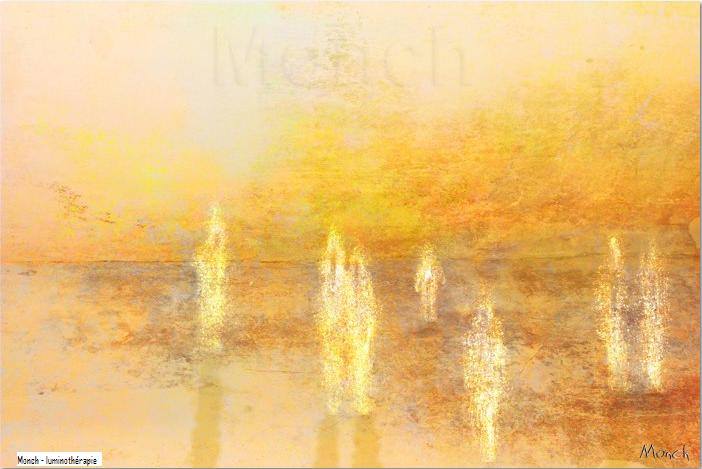
You, Dear Reader, are much needed and appreciated.
Everything written requires a reader to make it whole. The writer begins, then you, dear reader, take in the idea and its image, and so become the continuation of its breath. Please subscribe so that my words can breathe. Consider this my hand, reaching out to yours.